














Garden and Lighting: A Complete Guide to Outdoor LED Solutions
Table of Contents
- Understanding Garden and Lighting Fundamentals
- Garden Lighting Ideas for Different Outdoor Spaces
- Outdoor Security Lighting and Its Benefits
- IP Rating for Outdoor Lights: What You Need to Know
- Garden Lighting Installation: Planning and Best Practices
- Energy Efficiency and Cost Savings in Garden Lighting
- Frequently Asked Questions
Last Updated: October 6, 2026
Understanding Garden and Lighting Fundamentals
Garden and lighting transforms outdoor spaces from functional areas into welcoming environments that extend your home’s usable hours well into the evening. At Ledlam, we’ve helped countless homeowners and businesses discover how the right lighting design elevates gardens from overlooked corners into focal points of their properties.
Effective garden and lighting balances three core elements: visibility, atmosphere, and safety. The best outdoor schemes combine these without creating harsh glare or wasting energy. Whether you’re lighting a small patio or a sprawling garden, understanding these fundamentals prevents costly mistakes and ensures your space works as hard as you need it to.
The distinction between different lighting types matters more than most people realise. A single bright floodlight floods everything equally, creating an uninviting, security-camera feel. Layered lighting, mixing pathway illumination, accent lights for plants, and ambient lighting for entertaining, creates depth and draws the eye to what matters. This approach also uses less energy because you’re not over-lighting areas that don’t need it.
Garden Lighting Ideas for Different Outdoor Spaces
Successful outdoor schemes start with identifying what each area of your garden actually does. A pathway serves a different purpose than a seating area, which differs from a feature plant you want to showcase. Treating them all the same is why many gardens end up feeling flat or overly bright.
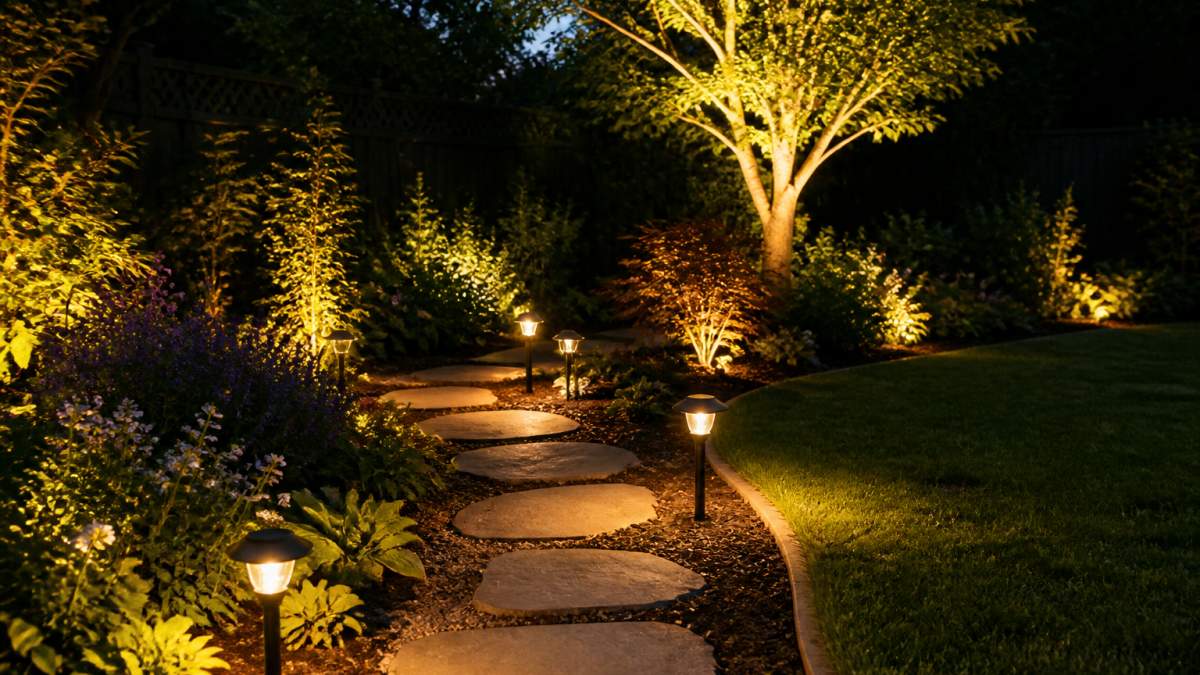
Path and Border Lighting
Path lighting serves the practical purpose of guiding movement safely, but it’s also one of the easiest ways to define your garden’s layout visually. Low-level lights along borders create a subtle frame that makes spaces feel intentional rather than accidental.
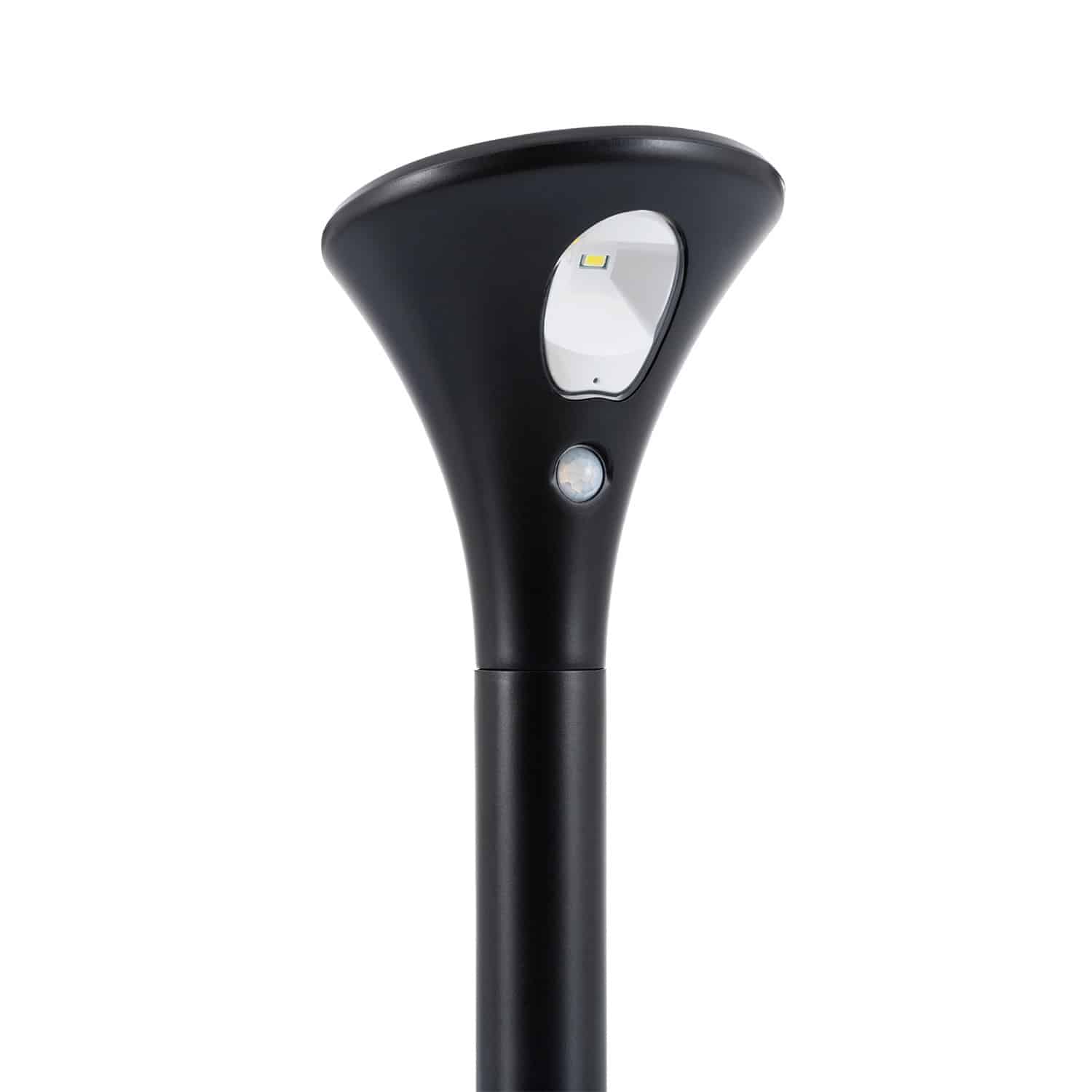
Solar path lights work well for remote garden areas where running mains power would be costly or disruptive. The Luxform Lighting Lupi Intelligent Solar LED Spot Spike Light offers 100 lumens with intelligent energy distribution, meaning it adapts its brightness based on battery charge, guaranteeing consistent lighting throughout the night. For a more budget-conscious approach covering larger areas, the Luxform Lighting LED Solar Avignon Ground Light Pack of 4 provides reliable illumination in a pack of four.
The key to path lighting is consistency. Lights spaced too far apart create dark gaps that defeat the safety purpose. A general guideline is one light every 1.5 to 2 metres along pathways. Too many lights, and you create visual clutter rather than guidance.
Feature and Accent Lighting
Feature lighting highlights specific elements, a specimen plant, architectural detail, water feature, or interesting texture, making them focal points after dark. This is where garden and lighting becomes genuinely creative rather than purely functional.
Spotlighting works by positioning a light source so it illuminates the feature from an angle that reveals texture or form. A mains-powered option like the Luxform Lighting Tauri Water Resistant 230V 10W COB LED Outdoor Floodlight gives you precise control and consistent brightness. The 10W COB LED delivers concentrated light suitable for highlighting trees, statues, or building facades. Its 3-metre mains cable and ground spike make positioning flexible, you can adjust angles as plants grow or your preferences change.

Accent lighting differs from spotlighting in subtlety. Rather than dramatically illuminating a feature, accent lights create gentle highlights that add visual interest without dominating. Warm-toned lights (2700K colour temperature) work better for accent purposes than cooler whites, which can feel clinical in garden settings.
Ambient and Entertaining Spaces
Ambient lighting creates the mood for relaxation or entertaining. This is where atmosphere matters more than pure brightness. String lights, for instance, deliver far less illumination than spotlights, but they transform a garden’s character entirely.
The Luxform Lighting Solar String Light with 10 LED Lights Sousse provides this atmospheric quality without requiring electrical installation. At 3.8 metres total length with warm white LEDs in crystal-shaped spheres, it creates the kind of inviting ambience that encourages people to stay outside longer. Solar charging means no mains connection needed, though placement in a sunny spot during the day is essential for reliable evening performance.

Seating areas benefit from overhead ambient lighting, either from string lights suspended between posts or from wall-mounted fixtures, combined with lower-level task lighting if people will be reading or dining. This layering prevents the area from feeling either too bright or too dim.
Outdoor Security Lighting and Its Benefits
Security lighting serves a specific purpose: deterring unwanted activity by eliminating dark areas where someone could hide or work undetected. Effective security lighting differs from decorative outdoor schemes in several important ways.
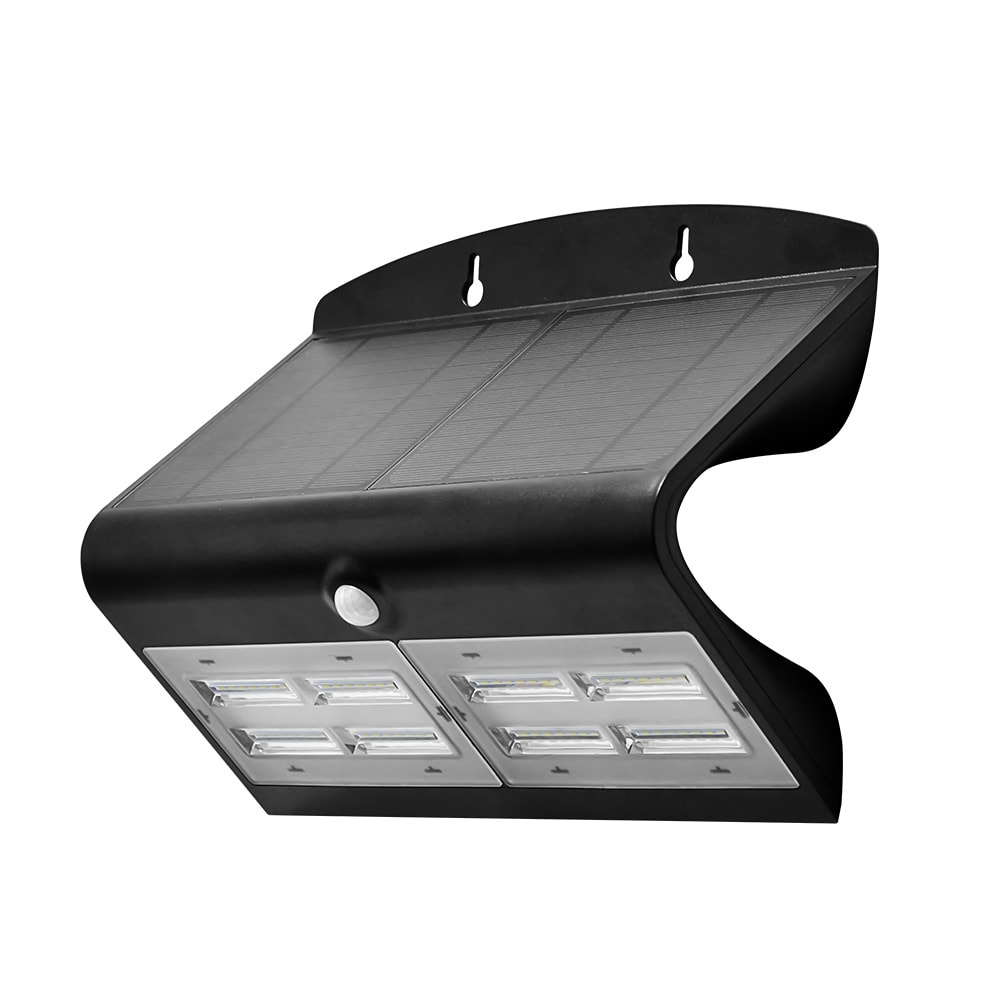
Motion-activated lights are the standard for security because they deter intruders more effectively than constantly-on lights, which people quickly learn to ignore. A light that suddenly activates when movement is detected creates the impression of active monitoring, even if no one is home.
Placement matters significantly. Security lights work best when positioned to illuminate vulnerable entry points, rear doors, side gates, ground-floor windows, rather than decorative areas.
Colour temperature for security lighting typically runs cooler than decorative schemes. Neutral white (4000K) or cool white (5000K) lights are more effective for security purposes because they reveal detail better than warm tones. However, mixing security lighting with ambient lighting requires care, a harsh security light near a seating area creates an unwelcoming contrast.
IP Rating for Outdoor Lights: What You Need to Know
IP rating (Ingress Protection rating) indicates how well a light withstands moisture and dust. Understanding this specification prevents buying lights unsuited to your garden’s conditions, which is the leading cause of premature failure in outdoor installations.
IP ratings use two digits: the first measures dust protection (0-6), the second measures water resistance (0-9). For garden lighting, the second digit matters most. An IP rating of IP44 means the light resists splashing water from any direction, suitable for most garden applications away from direct water jets. IP65 provides protection against water jets from any angle, making it suitable for areas near water features or where hoses might spray nearby. IP67 means the light can briefly withstand submersion, though true submersible lights are rare in garden applications.
Most garden lights sit somewhere between IP44 and IP65. The Luxform range, for instance, includes IP33 rated solar ground lights suitable for general garden use in normal weather conditions.
Checking IP rating before purchasing prevents the frustration of lights failing during their first winter.
Luxform Lighting Lupi Intelligent Solar LED Spot Spike Light 100 Lumen →
Garden Lighting Installation: Planning and Best Practices
Installation difficulty varies dramatically depending on your chosen approach. Solar lights require only ground placement. Mains-powered lights demand proper electrical installation and safety considerations. Planning before you start prevents costly mistakes and ensures your garden and lighting scheme functions safely.
Assessing Your Garden Layout
Start by mapping your garden’s functional zones. Where do people walk? Where do they sit? What features deserve highlighting? Sketch these areas, the detail doesn’t matter, but identifying zones prevents randomly scattering lights.
Consider sight lines from inside your home. Lights visible through windows at night can create glare and reflection, making interior spaces feel exposed. Position lights to illuminate outward rather than toward your house when possible.
Think about shadows. A light positioned directly behind a feature creates a silhouette rather than highlighting it. Angling lights slightly to the side reveals texture and form more effectively. This matters especially for trees and architectural features where texture is the point.
Assess existing power sources. If you’re planning mains-powered lights, knowing where outdoor sockets or circuits exist saves significant installation cost. If no suitable power is available, solar options become more practical despite their limitations in shaded gardens.
Choosing Power Supply Options
Solar lighting offers simplicity and no electrical installation cost, but it’s limited by geography and season. In southern England with good sun exposure, solar lights work reliably. In consistently shaded gardens or northern locations with limited winter daylight, they may not charge sufficiently for reliable evening performance.
Mains-powered lighting provides consistent brightness regardless of weather or season, but installation must meet electrical safety standards. This typically means running cabling from an outdoor circuit or installing a new one, work that requires a qualified electrician if you’re not competent with electrical installation.
Battery-powered lights sit between these options. They avoid electrical installation but require regular battery replacement. For temporary installations or areas where you might want to adjust positioning seasonally, battery lights make sense. For permanent schemes, the ongoing maintenance cost and environmental impact of battery replacement usually favours either solar or mains power.
Safety and Electrical Considerations
Any mains-powered outdoor lighting installation must comply with relevant electrical safety standards and Building Regulations. This isn’t negotiable, improper electrical installation creates genuine fire and electrocution risks.
For new outdoor circuits, a qualified electrician should assess your existing electrical installation, determine appropriate circuit capacity, install RCD (residual current device) protection, and ensure all cabling and connections meet current standards. This typically involves running cable through conduit to protect against damage, using IP-rated connectors, and ensuring the circuit can safely handle the load of your lights.
Existing outdoor circuits should be tested periodically by a qualified electrician. This identifies deterioration before it becomes dangerous.
Solar lights avoid electrical installation entirely but present different considerations. Ensure spike lights are positioned where they won’t be tripped over or damaged by garden maintenance. Check that solar panels receive adequate direct sunlight, placing them under tree cover defeats the purpose.
Energy Efficiency and Cost Savings in Garden Lighting
LED technology makes outdoor lighting far more efficient than older halogen or incandescent options. An LED spotlight consuming 10 watts produces brightness equivalent to a 50-watt halogen, reducing energy consumption by 80 per cent while lasting far longer.
This efficiency matters especially for mains-powered schemes running multiple lights for several hours nightly. A garden with six 10-watt LED spotlights running six hours daily consumes roughly 360 watt-hours, less than a single kettle boil. The same setup using halogen would consume roughly 1800 watt-hours, significantly increasing your electricity bill.
Solar and battery-powered lights eliminate energy cost entirely after purchase, though they carry upfront cost and eventual replacement expense. For permanent installations in well-lit locations, solar lights often prove more economical over several years despite higher initial investment.
The real efficiency gain comes from thoughtful design rather than technology alone. A well-planned scheme using layered lighting uses less energy than an over-lit space with harsh spotlights everywhere.
Creating effective garden and lighting schemes requires balancing aesthetics, safety, and practicality. Whether you’re starting from scratch or upgrading existing installations, Ledlam’s range of LED lighting solutions, from solar options like the Luxform Intelligent Spot Spike Light to mains-powered alternatives, gives you reliable, energy-efficient choices for any garden size or style. Browse our outdoor lighting collection to find the right products for your space, or visit our Basildon store for hands-on advice from our team.

Frequently Asked Questions
What is the best way to light a garden?
The best approach combines multiple lighting types for different purposes. Use path lighting to guide movement safely, accent lights to highlight plants or features, and ambient lighting for entertaining areas. Start with solar options like ground lights for low-cost installation, then add mains-powered solutions where you need brighter or more reliable coverage. Layer your lighting at different heights and angles to create depth and avoid harsh shadows.
How do I choose the right IP rating for outdoor lights?
IP ratings indicate water and dust resistance. For garden and lighting applications, look for IP44 minimum for general outdoor use, IP65 for areas near water features or high-pressure cleaning, and IP67 for lights in water. Check your specific garden conditions, exposed coastal areas or damp shaded spots may need higher protection than sheltered sunny locations.
Can I install garden lighting myself, or do I need an electrician?
Solar lights and battery-powered options are straightforward DIY projects. For mains-powered garden and lighting installation, assess the scope carefully. Simple plug-in floodlights like the Luxform Tauri (supplied with a 3-metre cable and 13A plug) require no wiring. Permanent installations involving trenching cables or installing outdoor sockets should be handled by a qualified electrician to comply with Building Regulations and safety standards.
How can I make garden lighting more energy efficient?
LED technology cuts energy consumption by up to 80% compared to traditional halogen or incandescent bulbs. Solar-powered options eliminate running costs entirely, the Luxform Lupi solar spike light and Luxform Avignon ground lights charge during daylight and run all night without electricity bills. For mains-powered setups, choose LED fixtures with timers or motion sensors to avoid leaving lights on unnecessarily, and select warm white (2700K) LEDs that create ambience while using less energy than brighter colour temperatures.