












Can You Put LED Bulbs in Enclosed Fixtures?
Table of Contents
- Can You Put LED Bulbs in Enclosed Fixtures?
- Understanding Enclosed Fixture LED Bulb Ratings
- LED Bulbs for Enclosed Fixtures: What Makes Them Different
- LED Bulb Overheating in Enclosed Fixtures: Causes and Solutions
- LED Bulb Wattage and Enclosed Fittings: Getting the Balance Right
- How to Select the Right LED Bulb for Your Enclosed Fixture
- Common Mistakes When Installing LED Bulbs in Enclosed Fixtures
- Frequently Asked Questions
Last Updated: 16 October 2026
Can You Put LED Bulbs in Enclosed Fixtures?
Yes, you can put LED bulbs in enclosed fixtures, but not all LED bulbs will work safely in them. The key question isn’t whether it’s possible, but whether your specific bulb is rated for that particular fixture type.
Enclosed fixtures trap heat. Traditional incandescent and halogen bulbs generate so much warmth that they’re designed to dissipate it freely into the air. LED bulbs produce far less heat, which is one reason they’re more efficient. But if you install a standard LED bulb in a fully enclosed fixture without ventilation, the bulb’s internal components can overheat, shorten its lifespan, or fail completely.

At Ledlam, we help customers navigate this exact issue regularly. The solution is straightforward: use an LED bulb specifically rated for enclosed fixtures. These bulbs have enhanced thermal management built into their design.
Below, we’ll show you exactly how to identify the right bulb for your enclosed fixture, what makes enclosed-rated bulbs different, and the common mistakes that cause LED bulbs to fail prematurely.
Understanding Enclosed Fixture LED Bulb Ratings
An enclosed fixture LED bulb rating tells you whether a bulb is safe to use in a fully enclosed space. This rating appears on the bulb’s packaging or product listing, often marked as “suitable for enclosed fixtures” or “enclosed rated.”

Not all LED bulbs carry this rating. Standard LED bulbs assume some air circulation around them. When you place one in a sealed fixture, heat builds up inside the bulb’s casing. The driver (the circuit that converts mains electricity to the right voltage for the LEDs) and the LEDs themselves are sensitive to temperature. Prolonged overheating damages these components.
Manufacturers test enclosed-rated bulbs under specific conditions. They place the bulb in a fully sealed fixture and measure the internal temperature under normal operating conditions. If the bulb stays within safe thermal limits, it earns the enclosed rating.
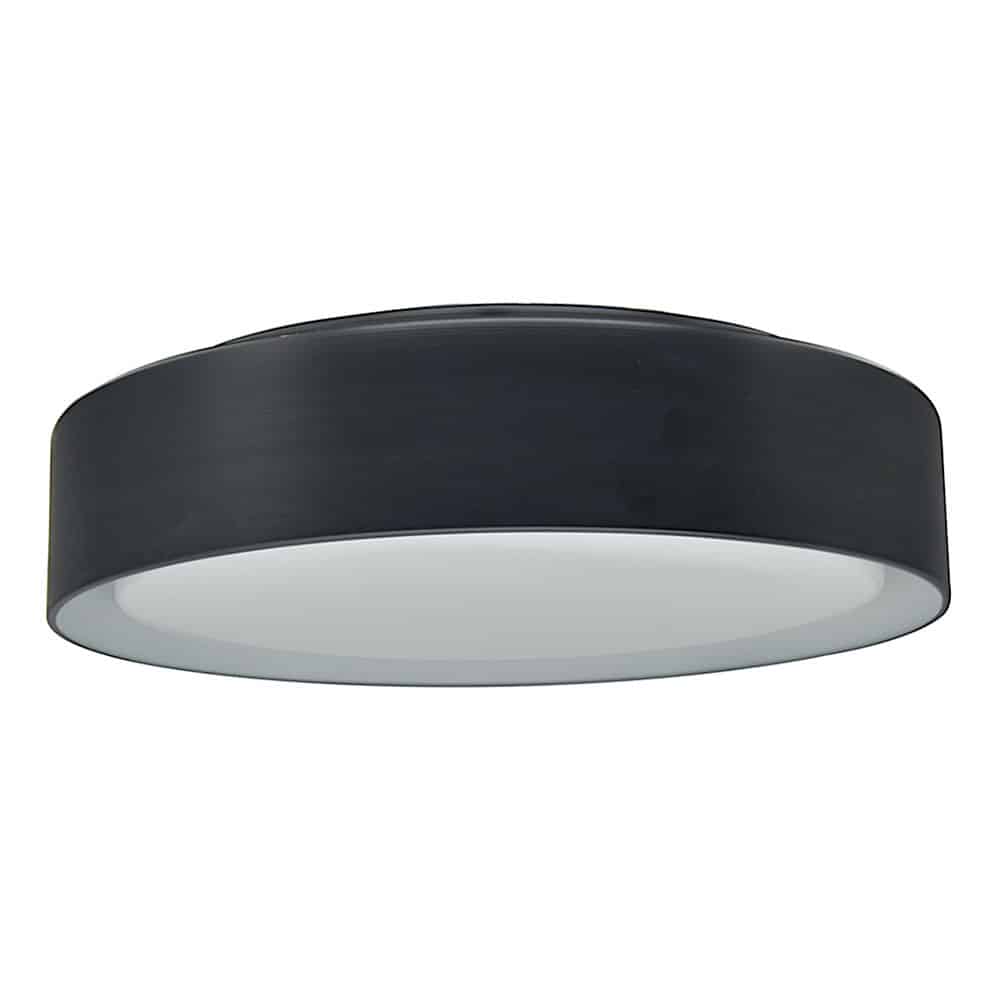
Check your fixture’s documentation or look inside. If it has a completely sealed housing with no ventilation holes, you need an enclosed-rated bulb. If it has gaps, vents, or an open design, a standard LED bulb will work fine.
LED Bulbs for Enclosed Fixtures: What Makes Them Different
LED bulbs for enclosed fixtures incorporate three key design differences that allow them to function safely in high-heat environments.
Heat Management in Enclosed Spaces
Heat management is the primary challenge. Standard LED bulbs rely on passive cooling, they shed heat through their metal base and into the surrounding air. In an enclosed fixture, there’s nowhere for that heat to go.
Enclosed-rated bulbs use better thermal pathways. They feature:
- Improved internal heat sinks (metal components that absorb and dissipate heat)
- Better thermal paste or compounds between the LED chips and the heat sink
- Aluminium casings that conduct heat away from sensitive electronics
- Compact designs that minimise internal air pockets where heat can accumulate
These upgrades cost more to manufacture, which is why enclosed-rated bulbs typically cost slightly more than standard models.
Thermal Protection Features
Many enclosed-rated LED bulbs include automatic thermal protection. If the bulb’s internal temperature exceeds a safe threshold, the bulb either dims or switches off temporarily to cool down.
This feature prevents catastrophic failure. Instead of burning out suddenly, the bulb protects itself. You’ll notice the light dim or flicker briefly, then return to normal brightness once it cools.
Some bulbs use temperature-sensitive components that reduce power draw when heat rises. Others have built-in thermal fuses that cut power if the temperature becomes critical. Both approaches are effective, they just work slightly differently.
LED Bulb Overheating in Enclosed Fixtures: Causes and Solutions
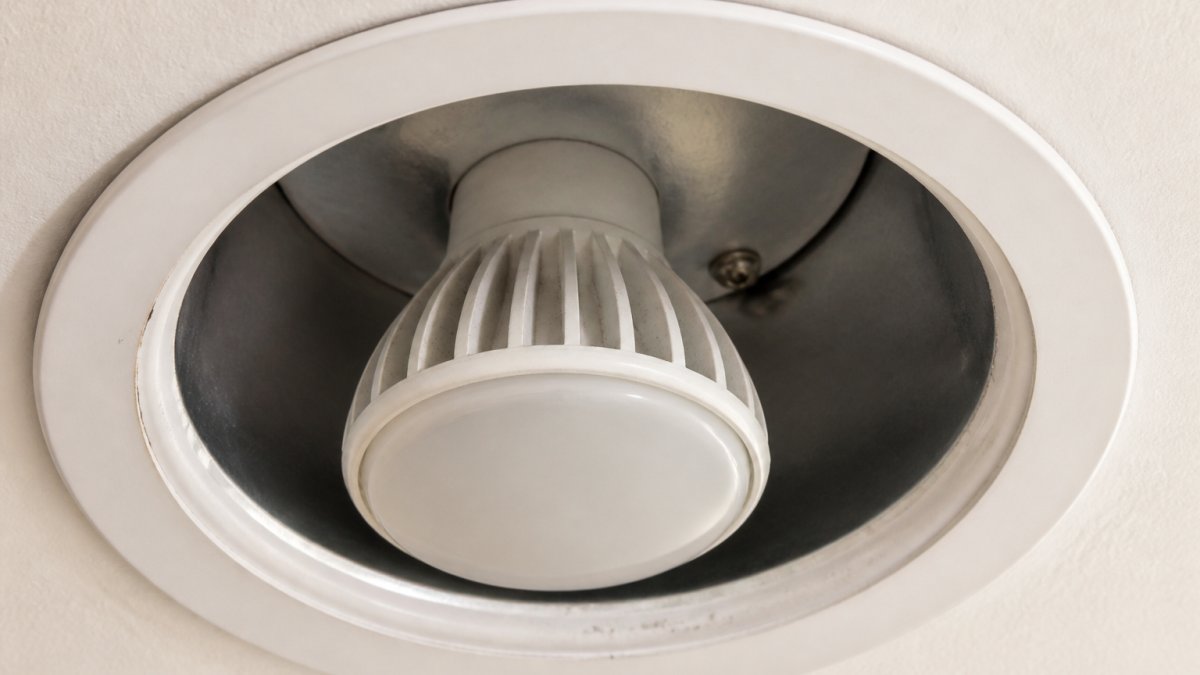
LED bulb overheating in enclosed fixtures happens when thermal design meets thermal reality. Understanding the causes helps you prevent it.
Common causes:
- Installing a non-enclosed-rated bulb in a sealed fixture
- Using a bulb with too high a wattage for the fixture
- Stacking multiple bulbs in a small enclosed space
- Blocked ventilation holes (if the fixture has any)
- Dirty or dusty fixtures that trap additional heat
Solutions:
The simplest fix is to replace the bulb with one rated for enclosed fixtures. If you’re already using an enclosed-rated bulb and it’s still overheating, check the wattage. Many enclosed fixtures have maximum wattage limits printed inside. Exceeding that limit causes excessive heat.
If your fixture has ventilation holes, clean them. Dust buildup acts as insulation and traps heat. A quick vacuum or compressed air can make a real difference.
For recessed ceiling fixtures, ensure there’s adequate space above the fixture for air to circulate. Some enclosed fixtures need clearance above them to dissipate heat into the ceiling cavity. If insulation is packed tightly around the fixture, heat has nowhere to escape.
LED Bulb Wattage and Enclosed Fittings: Getting the Balance Right
LED bulb wattage and enclosed fittings must match carefully. This is where many people make mistakes.
The wattage printed on an LED bulb is its actual power consumption, not its brightness equivalent. A 7W LED bulb uses 7 watts of electricity. But it might be labelled as a “60W equivalent” because it produces similar brightness to an old 60W incandescent bulb.
Your enclosed fixture has a maximum wattage rating. This is the highest wattage the fixture’s thermal design can safely handle. Exceeding it causes overheating.
Here’s the practical rule: match the actual wattage of your LED bulb to the fixture’s limit, not the incandescent equivalent. If your fixture says “maximum 40W,” you need an LED bulb that uses no more than 40 watts. A 7W LED bulb is safe. An 8W or 10W bulb might exceed the thermal limit.
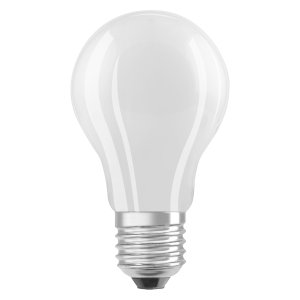
E27 410BP 5W High Powered LED GLS Bulb →
Many enclosed fixtures are designed for older, lower-wattage bulbs. If you have an older fixture rated for 40W incandescent, it might only safely handle a 5W LED bulb. Check the fixture first.
Pro Tip
The fixture’s maximum wattage rating is printed inside the fixture housing, usually near the socket. Take a photo with your phone so you can reference it when shopping for bulbs.
How to Select the Right LED Bulb for Your Enclosed Fixture
Selecting the right bulb involves three checks. Do all three before you buy.
Check the Fixture Specifications
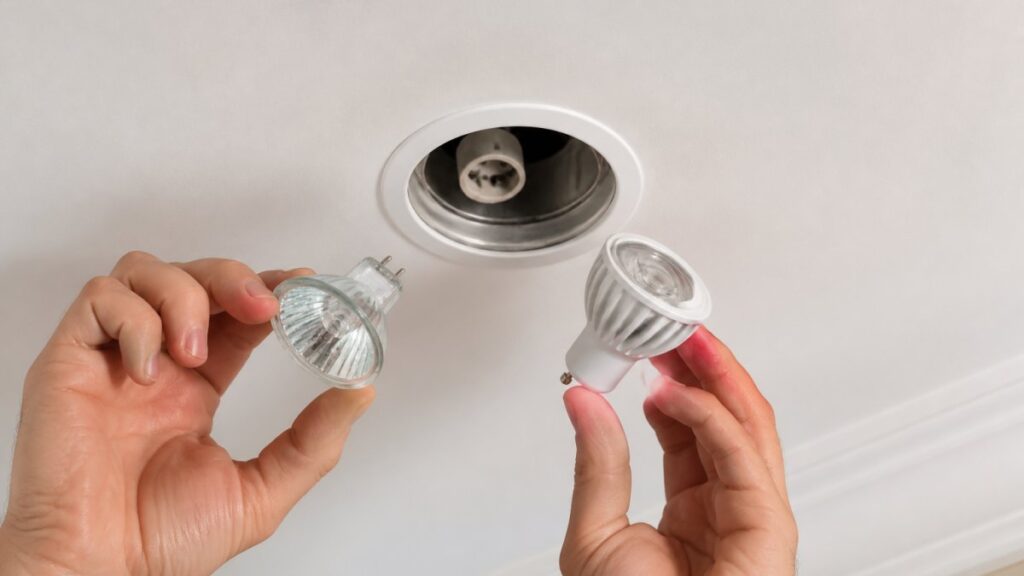
Open or remove the fixture cover and look inside. Most fixtures have a label or stamp showing the maximum wattage and base type (E27, E14, GU10, etc.).
Write down:
- Maximum wattage allowed
- Socket type (the fitting the bulb screws or clicks into)
- Whether it’s fully enclosed or has ventilation
If you can’t find a label, measure the fixture’s opening and check the manufacturer’s documentation online. You’ll need this information to match the right bulb.
Look for Enclosed-Rated Bulbs
Once you know your fixture’s specs, search for bulbs marked “suitable for enclosed fixtures” or “enclosed rated.” This label is critical.
At Ledlam, our E27 LED Bulb 10W 820BPD dimmable is specifically designed for enclosed fixtures. It features advanced cooling technology and high-temperature electronic components that allow it to operate safely in sealed spaces. At £5.99, it’s a solid choice for enclosed ceiling lights and wall fixtures.
For lower-wattage needs, the E27 LED Bulb 7W 610BP at £1.98 is excellent value and works well in most enclosed fixtures. It includes heat-conductive materials and produces consistent, flicker-free light.
Check the product description or packaging. It should explicitly state the bulb is rated for enclosed fixtures. If it doesn’t mention this, it’s probably not suitable.
Consider Dimming Compatibility
If your fixture uses a dimmer switch, you need a dimmable LED bulb. Not all LED bulbs dim smoothly with standard dimmers, especially older ones.
Look for bulbs marked “dimmable” or “compatible with LED dimmers.” The E27 LED Bulb 10W 820BPD dimmable is specifically dimmable, making it ideal for enclosed fixtures with dimmer switches.
If you’re unsure whether your dimmer is compatible, test the bulb. Many modern dimmers work fine with quality LED bulbs. If you experience flickering or the bulb won’t dim smoothly, you might need a dedicated LED dimmer switch.
Watch Out
Mixing dimmable and non-dimmable bulbs in the same fixture can cause flickering. Use the same type throughout the fixture.
Common Mistakes When Installing LED Bulbs in Enclosed Fixtures
Most LED bulb failures in enclosed fixtures come from preventable mistakes.
Mistake 1: Ignoring the enclosed-rated label. Many people buy the cheapest LED bulb that fits the socket, then install it in an enclosed fixture. The bulb works fine for a few weeks, then dims or fails. The bulb was never designed for that environment.
Mistake 2: Exceeding the fixture’s wattage limit. A fixture rated for 40W maximum can safely handle a 5W LED bulb but not a 12W one. Check the limit before you buy.
Mistake 3: Not checking the socket type. E27, E14, and GU10 are common, but they’re not interchangeable. A bulb that doesn’t fit the socket is useless.
Mistake 4: Installing multiple bulbs too close together. Some enclosed fixtures have multiple sockets in a small space. When you pack several LED bulbs close together, they can trap each other’s heat. Leave space between bulbs if possible, or use lower-wattage bulbs.
Mistake 5: Assuming “LED” means it works everywhere. LED technology is flexible, but not every LED bulb is suitable for every application. Enclosed fixtures are a specific use case. Respect that limitation.
Mistake 6: Not cleaning the fixture. Dust and debris inside an enclosed fixture act as insulation. They trap heat and reduce the bulb’s lifespan. Clean your fixtures annually.
Choosing the right LED bulb for your enclosed fixture is straightforward once you know what to look for. Check your fixture’s specifications, select a bulb rated for enclosed use, and match the wattage carefully. These three steps prevent nearly all LED bulb problems in enclosed spaces.
If you’re shopping for enclosed-rated LED bulbs, Ledlam stocks a wide range designed specifically for this purpose. Our E27 LED Bulb 10W 820BPD dimmable and E27 LED Bulb 7W 610BP are both enclosed-rated and built for reliable performance in sealed fixtures. Browse our full range of E27 LED bulbs online, or visit us at Basildon Market to see them in person. We’re here to help you find the right solution for your lighting needs.
Frequently Asked Questions
Can you use LED bulbs in enclosed fixtures?
Yes, but only if the bulb is specifically rated for enclosed fixtures. Many standard LED bulbs cannot be used in fully enclosed fittings because they generate heat that becomes trapped, potentially damaging the bulb’s electronics or causing it to fail prematurely. Always check the bulb’s packaging or product specifications for an enclosed-fixture rating before installation. Ledlam’s range of E27 LED bulbs includes guidance on enclosed fixture compatibility.
What happens if you put a non-rated LED bulb in an enclosed fixture?
A non-rated LED bulb in an enclosed fixture risks overheating because the bulb’s heat cannot dissipate properly. This can shorten the bulb’s lifespan significantly, cause flickering, reduce brightness, or result in complete failure. In extreme cases, excessive heat buildup may damage the fixture itself or pose a fire risk. Always verify the bulb’s enclosed-fixture rating before installation to avoid these problems.
How can you tell if an LED bulb is rated for enclosed fixtures?
Check the product packaging, specification sheet or retailer’s product page for text stating ‘suitable for enclosed fixtures’, ‘enclosed fixture rated’, or similar language. Some manufacturers use symbols or certifications to indicate this. If unsure, contact the supplier directly. Ledlam provides clear product descriptions on its website, helping you make an informed choice.
Do enclosed LED bulbs need a lower wattage than standard bulbs?
Enclosed-rated LED bulbs are designed to handle standard wattage equivalents safely within enclosed spaces through improved heat management. However, the actual wattage (power consumption) of an LED bulb is much lower than its incandescent equivalent. For example, a 60W-equivalent LED bulb typically uses only 7-10W of actual power. Always match the bulb’s wattage rating to your fixture’s maximum recommended wattage, which you’ll find in the fixture’s documentation or on the fitting itself.