












Smart LED Strip Lights for Bedroom: 2026 Buying Guide
Table of Contents
- Smart LED Strip Lights for Bedroom: What Actually Matters
- Smart LED Strip Lights with Alexa: Voice Control Explained
- LED Strip Light Length for Bedroom: How Much Do You Need?
- How to Install LED Strip Lights in Bedroom Spaces
- LED Strip Lights Behind Bed: Placement and Effect
- Smart LED Strip Lights Compared: Key Features Side by Side
- Common Mistakes to Avoid with Bedroom Strip Lighting
- Conclusion
- Frequently Asked Questions
Last Updated: October 21, 2026
Smart LED Strip Lights for Bedroom: What Actually Matters
Choosing smart LED strip lights for a bedroom comes down to four things: control protocol, colour quality, power supply safety, and how the strip is mounted. Get those right and the rest is detail. Get them wrong and you end up with flicker, a strip that peels off in a fortnight, or an app that fights your Wi-Fi.

Here’s the honest version of what separates a good bedroom strip from a frustrating one.
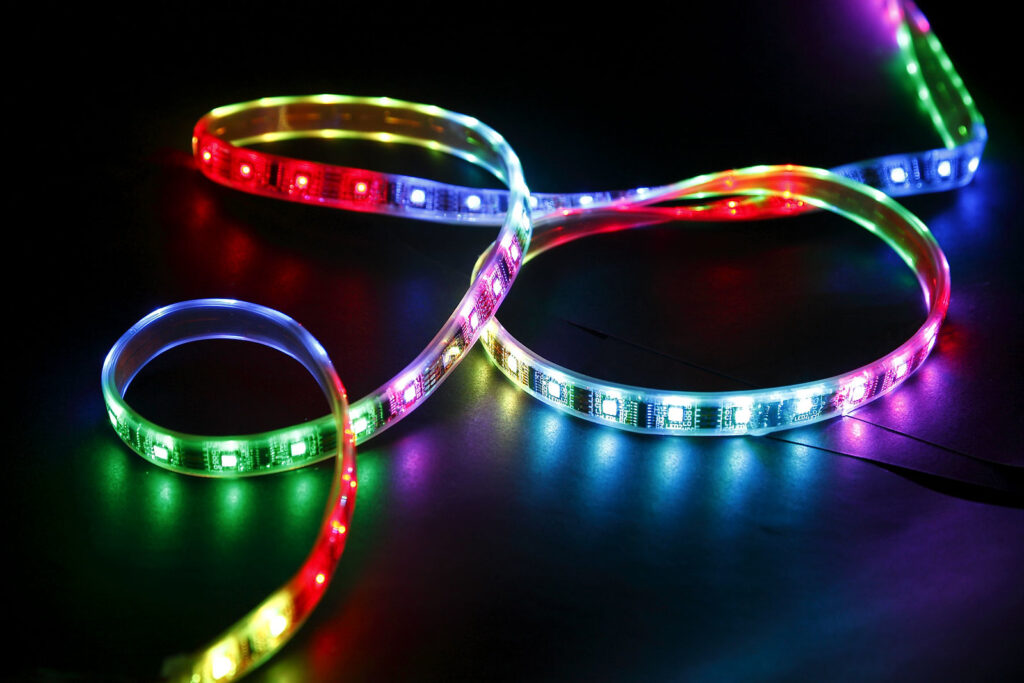
The single biggest decision is whether you want smart LED strip lights that run on Wi-Fi, Zigbee, or Bluetooth. Wi-Fi strips connect directly to your router and work with Alexa without a hub. Bluetooth strips are cheaper but usually only work within range of your phone. Zigbee needs a hub but responds faster and more reliably when you have several strips.
Colour quality matters more than colour quantity. A strip that claims 16 million colours but renders warm white as a sickly green will look wrong every evening. Look for a stated colour rendering index (CRI) of 80 or above, and check whether the white channel is dedicated rather than mixed from RGB.
Watch Out
Cheap unbranded strips often skimp on the power supply, not the LEDs. A mismatched or under-rated driver is the most common cause of flicker, overheating and early failure. Buy the strip and driver as a matched pair where you can.
Smart LED Strip Lights with Alexa: Voice Control Explained
Alexa control works in one of two ways: the strip connects to your Wi-Fi directly, or it connects through a hub or bridge that Alexa talks to. Direct Wi-Fi is simpler for one room. A hub is more reliable once you have several devices.
Setup follows the same pattern across most brands. Install the manufacturer’s app, put the strip into pairing mode, connect it to your 2.4GHz Wi-Fi network, then enable the relevant skill in the Alexa app and run device discovery. Most strips will not connect to a 5GHz-only network, which is the most common setup failure we hear about.
What you can actually say matters too. Expect to control on/off, brightness, colour and scenes. Grouping lets you say “Alexa, turn on the bedroom” rather than naming each strip. For anything more granular, such as slow fades or music sync, you’ll usually need the manufacturer’s own app.
If you want to compare how the major platforms handle device grouping, Alexa’s official smart home setup guidance is a reasonable starting point, and the Connectivity Standards Alliance on Matter explains the newer cross-platform standard that more strips now support.
LED Strip Light Length for Bedroom: How Much Do You Need?
Measure the run you intend to light, then add 10 to 15 per cent for corners, cuts and the tail back to the power supply. That’s the honest answer. A king-size bed headboard is typically around 1.8 metres wide, so a 5m reel covers a headboard plus a run along one bedside wall with room to spare.
Reels are usually sold in 5m lengths, and you can cut most strips at marked intervals, typically every 5cm or 10cm depending on the model. Cutting elsewhere damages the circuit. If you cut a strip, you’ll need a connector or a soldered joint to rejoin it.
Voltage drop is the thing nobody warns you about. On 12V or 24V runs, brightness fades towards the far end once you go past roughly 5 metres on a single feed. For longer runs, feed power in from both ends or use a higher-voltage strip.
| Bedroom run | Typical length | What to buy |
|---|---|---|
| Single headboard | 1.8-2.2m | One 5m reel, cut to size |
| Headboard plus one bedside wall | 3-4m | One 5m reel |
| Full room perimeter | 12-16m | Three 5m reels, multiple feeds |
| Wardrobe or alcove accent | 1-2m | One 5m reel, offcuts kept |
How to Install LED Strip Lights in Bedroom Spaces
Installing LED strip lights in a bedroom takes about an hour for a single run: clean the surface, test the strip before mounting, attach it, then connect the driver. The order matters, because a strip that fails after it’s stuck to the wall is a strip you have to throw away.
- Test everything first. Unroll the strip, connect the driver and controller, and power it up on the floor. Confirm colour, brightness and app pairing all work before anything touches adhesive.
- Clean and dry the surface. Wipe down with a degreaser and let it dry fully. Adhesive fails on dusty paint or freshly plastered walls.
- Plan the route and mark cuts. Dry-fit the run, note where it turns, and mark cut points with a pencil.
- Mount the strip. Peel and press firmly along the run, or use aluminium channel for a cleaner finish and better heat dissipation.
- Connect the driver. Site the power supply where it has ventilation and is reachable, not buried behind furniture.
- Test again, then tidy cables. Check for flicker at low brightness and secure any slack cable.
Pro Tip
Aluminium mounting channel costs a little more than adhesive alone but solves three problems at once: it stops the strip peeling, spreads heat away from the LEDs, and diffuses the light so you don’t see individual dots reflected on the wall.
On electrical safety, be clear about what’s what. Fixed wiring work in a dwelling is notifiable under the government’s guidance on Building Regulations approval in many circumstances, and the Institution of Engineering and Technology’s wiring regulations information sets out the standard electricians work to. Plug-in low-voltage strip kits sit outside that, but anything you wire into a circuit should be done by a competent person.
LED Strip Lights Behind Bed: Placement and Effect
Mounted behind a headboard, LED strip lights create a soft halo on the wall above and around the bed. The effect depends almost entirely on the gap between the strip and the wall: 50mm to 100mm gives a wide, even wash, while a tight gap produces a bright, harsh line.
5m LED Strip Light 24V DC, SMD5050, 60LED/m, IP65 →
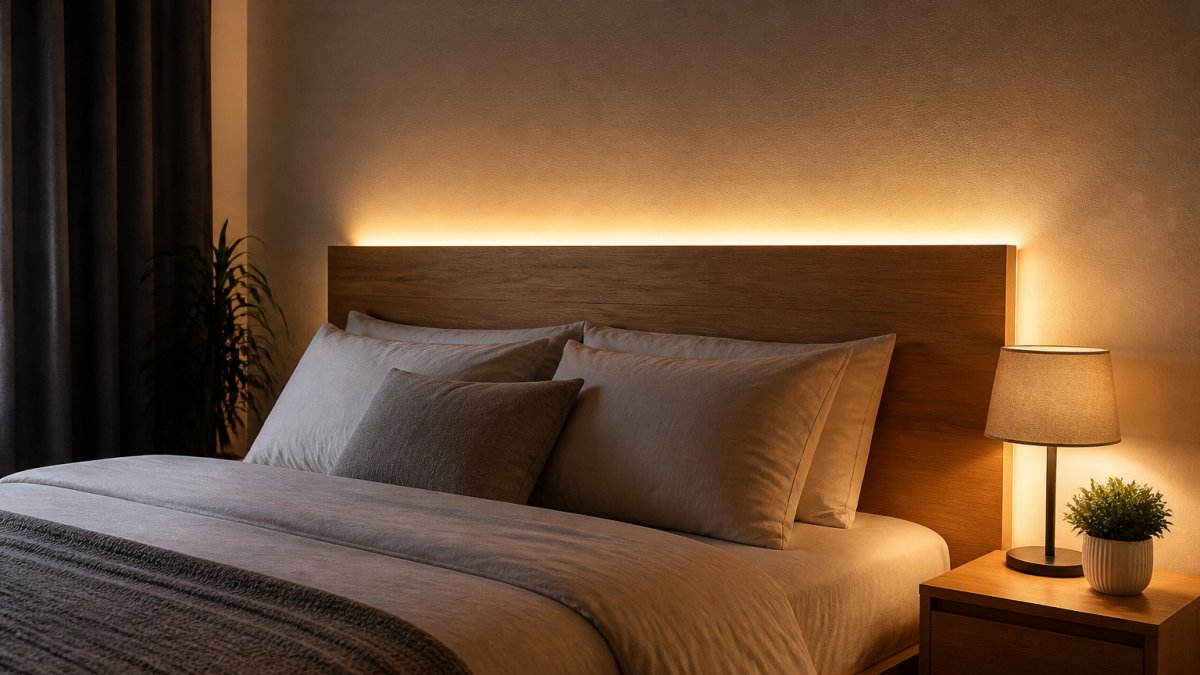
Point the LEDs at the wall, not into the room. For a headboard, run the strip along the top edge facing upward, or along the back face facing the wall. Warm white in the 2700K to 3000K range suits a bedroom better than cool white, which reads clinical at night.
A second useful placement is under the bed frame itself, angled towards the floor. It gives a low-level glow for night trips without waking anyone, and it hides the strip completely. Avoid pointing any strip directly at eye level from a lying position.
Smart LED Strip Lights Compared: Key Features Side by Side
Buying decisions come down to a handful of features, and the trade-offs are predictable. Here’s how the main options stack up for bedroom use.
| Feature | What to look for | Why it matters in a bedroom |
|---|---|---|
| Control | Wi-Fi, Zigbee, Bluetooth, Matter | Wi-Fi suits one room; Zigbee/Matter scale better |
| White quality | Dedicated white channel, CRI 80+ | Warm white looks natural, not green or pink |
| Voltage | 24V DC preferred | Less brightness drop over longer runs |
| Rating | IP20 for dry rooms, IP65 for bathrooms | Bedrooms only need IP20 |
| Dimming | Smooth at low levels | Night use needs the bottom 10% to work |
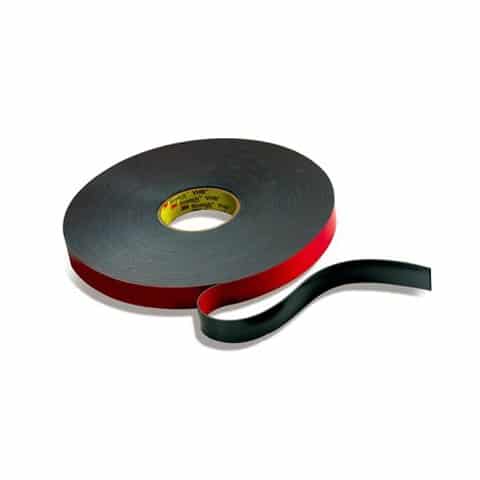
| Mounting | 3M adhesive plus channel option | Adhesive alone peels on textured walls |
For a bedroom, prioritise dimming quality and white rendering over colour count. A strip that dims smoothly to a genuine 5 per cent brightness is worth more at 11pm than one with 16 million colours that jumps from bright to off.
Our 5m LED Strip Light 24V DC, SMD5050, 60LED/m, IP65 is a good example of the trade-off done sensibly. It’s a monochrome strip at £14.99, fully dimmable with the right controller, rated IP65, and specified at 30,000 hours. It isn’t a colour-changing smart strip, and we won’t pretend otherwise. What it does is give you a bright, even, dimmable run at 1320 lumens per metre, which is what most bedroom accent lighting actually needs. Pair it with a suitable controller and power supply, and you have the lighting half of the job sorted properly.
If you specifically want app and voice control with colour, look for a smart controller and driver matched to the strip’s voltage and current rating.
Common Mistakes to Avoid with Bedroom Strip Lighting
The same handful of errors come up again and again. Avoiding them is cheaper than replacing a strip.
- Skipping the test fit. Powering up before mounting takes two minutes and saves the whole reel.
- Under-speccing the driver. Match the power supply to the strip’s total wattage with headroom to spare.
- Ignoring voltage drop. Long single runs dim at the far end. Split the run or feed both ends.
- Choosing cool white for a bedroom. 6000K reads like an office. Stay at 2700K to 3000K.
- Sticking to emulsion without cleaning. Adhesive fails within weeks on dusty or newly painted walls.
- Burying the driver. Power supplies need ventilation and access for maintenance.
- Cutting outside marked points. It breaks the circuit and the section beyond the cut won’t light.
Key Takeaway
The most common bedroom strip failure isn’t the LEDs, it’s the installation. Clean surfaces, matched drivers and sensible run lengths prevent nearly every problem we hear about.
Conclusion
Getting bedroom strip lighting right is mostly about restraint: warm white over rainbow, a matched driver over a cheap one, and a properly cleaned surface over hope. The strip itself is the easy part.
If you’d rather not guess, browse our LED strip lights range or come and talk it through at our Basildon Market shop. We’ll help you match strip, controller and power supply before you buy, and you can order online for delivery or collect in person. Check out our LED Offers today.
Frequently Asked Questions
How long should LED strip lights be for a bedroom?
Measure the run you want to light, then add 10-15% for corners and connections. A behind-bed run on a double bed typically needs 3-4 metres, while a full room perimeter can need 10 metres or more. Buy a reel slightly longer than your measurement so you can cut to fit at marked points. If you are unsure, a 5m reel covers most single-wall bedroom projects with spare left over for a second accent area.
Can smart LED strip lights be controlled with Alexa or Google Assistant?
Yes, provided the strip uses a compatible smart controller or works through a hub that supports those platforms. Check the product listing for Alexa and Google Assistant support before buying. Voice control lets you switch the lights on, dim them, change colour and set routines without reaching for a phone. If you already use a smart speaker in the bedroom, choose a strip that connects to the same ecosystem to avoid running two apps.
Are LED strip lights safe to leave on overnight?
Quality LED strips run cool and are generally fine for overnight use, but always use the power supply supplied or recommended by the manufacturer and avoid covering the strip with bedding or curtains. Check that the driver is rated for continuous use and keep it ventilated. If you notice flickering, discolouration or a hot driver, switch off and replace the faulty part. For complete peace of mind, follow the manufacturer’s instructions and have any mains wiring installed by a competent electrician.
Can you cut LED strip lights to fit?
Most LED strips can be cut at marked intervals, usually every 5cm or 10cm depending on the model. Cut only on the marked line with sharp scissors, then reseal the end if the strip is IP-rated. Cutting elsewhere will break the circuit and leave that section dead. Measure twice before cutting, and keep the offcut for a smaller project rather than throwing it away.