














How Do You Test RCD Protection at Home Safely?
Last Updated: October 27, 2026
Quick Summary
To test RCD protection at home, press the test button marked T or Test and confirm the switch flicks down immediately, then reset it. Test socket RCDs, portable adapters and fixed RCDs every three months, and if the device fails to trip, stop using it and call a qualified electrician.
- An RCD trips when it detects a difference between live and neutral current, protecting people rather than wiring.
- Warn everyone at home before testing, as the power will briefly go off.
- Record the date of each test so you do not lose track of when you last checked.
- If an RCD keeps tripping, unplug everything on the circuit and add items back one at a time.
- Call an electrician if the RCD feels warm, shows scorch marks or trips constantly after appliances are ruled out.
Table of Contents
- How to Test RCD Protection at Home: What You Need to Know First
- How to Test an RCD with the Test Button
- How Often to Test an RCD
- What to Do If an RCD Does Not Trip
- Why Your RCD Keeps Tripping
- Testing RCD Sockets and Portable RCDs
- When to Call an Electrician About Your RCD
- Check Your RCD Protection and Shop Electrical Essentials
- Frequently Asked Questions
How to Test RCD Protection at Home: What You Need to Know First
Learning how to test RCD protection at home takes about two minutes and could save a life. An RCD, or residual current device, is a safety switch that cuts the power when electricity leaks to earth. At Ledlam, we supply electrical accessories to homeowners and electricians. Below, we walk through the test button method and what to do when something goes wrong. Regularly checking these devices forms a vital part of domestic electrical testing, ensuring that your home remains protected against hidden faults.
What an RCD Does and Why It Matters
An RCD is a protective device that trips the circuit when it detects a difference between live and neutral current, which usually means current is escaping through a person or damaged cable. It reacts far faster than a fuse or circuit breaker.
That speed is the point. A fuse protects wiring. An RCD protects people.
You will find RCDs in three places:
- Inside a consumer unit, as a main switch or RCBO
- As a built-in RCD socket
- As a plug-in portable RCD adapter
Before You Start: Safety Checks
Do a few checks before you press anything. Keep your hands dry. Make sure you can see the RCD clearly and reach the test button without stretching.
Then confirm three things:
- You know which circuits the RCD protects
- You have a torch or phone light ready, because power will go off
- Anyone using a computer or medical equipment knows what you are doing
Watch out: never test with wet hands or while standing on a damp floor. The test itself is safe, but the setup around it matters.
How to Test an RCD with the Test Button
Testing an RCD with the test button is a simple check you can do yourself. If it does not trip, the RCD needs attention from a qualified electrician.
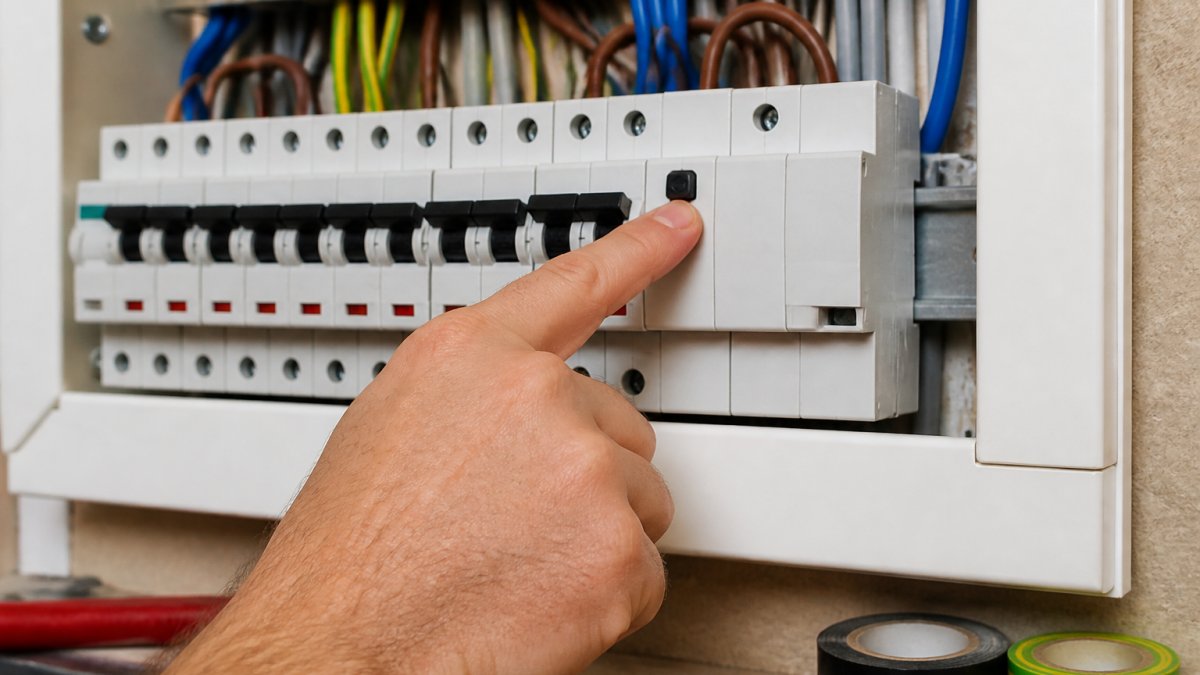
Step-by-Step: Using the Test Button
Follow this sequence:
- Warn anyone at home that the power will briefly go off.
- Press the test button, usually marked “T” or “Test”.
- The RCD switch should flick down immediately.
- Reset the switch back up.
- Check that clocks and appliances come back on.
Repeat for each RCD in the unit. If you have a portable RCD adapter, plug it into a live socket, press its test button, and confirm it clicks off.
What Should Happen When You Press the Test Button
The device should trip instantly, and the switch should sit in the off position. That tells you the mechanism is working.
A slow trip, a buzzing sound, or no movement at all are all warning signs. The Electrical Safety First guidance on RCDs explains that a failed trip means the device cannot be relied on to protect you.
How Often to Test an RCD
How often to test an RCD depends on the device and where it is fitted. The test button check is a user test, not a substitute for professional testing.
As a practical routine:
- Press the test button every three months on socket RCDs and portable adapters
- Test fixed RCDs in the consumer unit at the same interval
- Record the date so you do not lose track
Manufacturers often print a recommended interval on the device or in the instructions. Follow that guidance where it differs. Fixed wiring checks and trip-time testing are a job for a competent electrician, and the IET guidance on electrical installation condition reports sets out how that periodic inspection works.
Here is the testing routine the article recommends, along with what each check covers.
| Item | Frequency | Note |
|---|---|---|
| Socket RCDs and portable adapters | Every three months | Press the test button |
| Fixed RCDs in the consumer unit | Every three months | Same interval as socket RCDs |
| Recording the test date | Each test | Keeps track of when you last tested |
| Manufacturer’s stated interval | As printed on device | Follow it where it differs |
| Fixed wiring and trip-time testing | Periodic inspection | Job for a competent electrician |
What to Do If an RCD Does Not Trip
If an RCD does not trip, stop using it and seek advice from a qualified electrician.
Why Your RCD Keeps Tripping
An RCD keeps tripping when it senses a real earth fault or a build-up of small leakages across a circuit. It is doing its job, but something downstream is causing it.
Common Causes of Nuisance Tripping
The usual suspects are:
- A faulty appliance, often a kettle, washing machine or outdoor device
- Damp in an outside socket or garden cable
- Damaged cable insulation
- Too many devices with small leakages on one circuit
- A failing RCD itself
To narrow it down, unplug everything on the circuit and reset the RCD. Plug items back one at a time until it trips. The last item you added is the likely culprit.
Testing RCD Sockets and Portable RCDs
If you are setting up protected power for a shed, garage or workshop, our emergency battery pack for LED panel lights includes a test button and charging indicator, which makes checking backup lighting straightforward after a trip.
When to Call an Electrician About Your RCD
Call an electrician if the RCD fails to trip, trips constantly after you have ruled out appliances, or feels warm or shows scorch marks. If you need help with orders, products or inquiries, you can contact us for assistance. Also call if you are unsure which circuits a device protects.
Fixed RCD testing with instruments, fault finding on wiring, and replacement inside a consumer unit are not DIY tasks. The Health and Safety Executive guidance on electrical safety is clear that electrical work should be done by someone competent.
Check Your RCD Protection and Shop Electrical Essentials
Ledlam supplies extension leads and everyday electrical essentials from our Basildon Market store and online. Browse the shop for electrical essentials, or check out our LED offers today.
Frequently Asked Questions
Can I test an RCD without an electrician?
You can test an RCD using the test button on the device itself. A test button check is not a substitute for professional testing.
Will testing an RCD switch off my electricity?
Pressing the test button is intended to test the RCD. Follow the device instructions.
What is the difference between an RCD and an RCBO?
An RCD (Residual Current Device) protects multiple circuits against earth leakage, but it does not protect against overcurrent. An RCBO (Residual Current Breaker with Overcurrent) combines both functions in one device, protecting a single circuit against earth leakage and overload. RCBOs are common in modern consumer units because a fault on one circuit does not trip the whole board. Both types have a test button and should be tested regularly.
When should I call an electrician about my RCD?
Seek advice from a qualified electrician if you are unsure about your RCD or installation.