What LED Colour Temperature Actually Means (and Why It Matters)
Getting the colour temperature wrong is the fastest way to make a good room look wrong. Knowing how to choose LED bulb colour temperature comes down to one number: the Kelvin rating printed on the box.
Colour temperature is the warmth or coolness of the light a bulb gives off, measured in Kelvin (K). It has nothing to do with how bright the bulb is.
Get it right and a room feels calm, welcoming and finished. Get it wrong and a bedroom can feel like a dentist’s waiting room.
Kelvin, Explained Without the Jargon
Think of Kelvin as a scale from candlelight to overcast daylight.
2700K looks like a traditional incandescent bulb
3000K sits just slightly crisper
4000K reads as clean and neutral
6000K mimics bright daylight
Lower numbers mean warmer, more orange light. Higher numbers mean cooler, whiter light.
Colour Temperature Is Not Brightness
Brightness is measured in lumens, not Kelvin. A 2700K bulb and a 6000K bulb can both put out exactly 1700 lumens.
So when you pick a colour temperature, you are choosing a mood, not a light level. If you need more light, look for a higher lumen figure. If you need a different feel, change the Kelvin.
LED Bulb Colour Temperature Chart: What Each Kelvin Rating Looks Like
Use this LED bulb colour temperature chart as a quick reference before you buy:
Kelvin
Appearance
Typical Use
2700K
Warm white
Living rooms, bedrooms
3000K
Soft white
Hallways, kitchens
4000K
Cool white
Offices, bathrooms
6000K
Daylight
Garages, task areas
The gap between each step is small on paper but obvious in a room. Two bulbs that look identical on a shelf can read completely differently once they are switched on.
Warm white sits around 2700K to 3000K and has a soft, yellow tone. Cool white starts near 4000K and climbs, giving a cleaner, whiter look.
Neither is better. They simply do different jobs.
Where Warm White Works Best
Living rooms and bedrooms
Dining areas and cosy corners
Anywhere you want to relax
Warm white is the safe default for most homes. It flatters wood, fabric and skin tones.
Where Cool White Earns Its Place
Kitchens and bathrooms
Home offices and workspaces
Garages, utility rooms and hallways
Cool white helps you see detail and stay alert. In a kitchen, that matters when you are chopping vegetables or checking whether something is cooked.
The mistake we see most often is mixing both in one open-plan space. It looks unfinished, like two different rooms stitched together.
Pro Tip Pick one colour temperature for any open-plan area and stick to it. If you want variety, change it room by room, not bulb by bulb.
2700K vs 3000K LED Bulbs: The Difference You Can Actually See
The 2700K vs 3000K LED bulbs comparison is the one people agonise over most, and the honest answer is: the difference is subtle but real.
2700K leans amber, close to old halogen. 3000K is a touch whiter and cleaner while still feeling warm. Side by side, 3000K looks slightly brighter and more modern.
Here is how to decide:
Choose 2700K if you want maximum cosiness, especially in bedrooms
Choose 3000K if you want warmth with a bit more clarity, such as in a hall or kitchen
Do not mix them in the same room unless you want to notice the mismatch
If you are replacing halogen downlights, 2700K is usually the closest match to what you had. If you are starting fresh, 3000K is a good middle ground.
There is no single best LED colour temperature for each room, but there is a sensible starting point for every space.
Room
Recommended
Why
Living room
2700K
Relaxed, warm, flattering
Bedroom
2700K
Helps you wind down
Kitchen
3000K-4000K
Clear light for tasks
Bathroom
3000K-4000K
Bright and clean
Home office
4000K
Keeps you focused
Hallway
3000K
Welcoming but practical
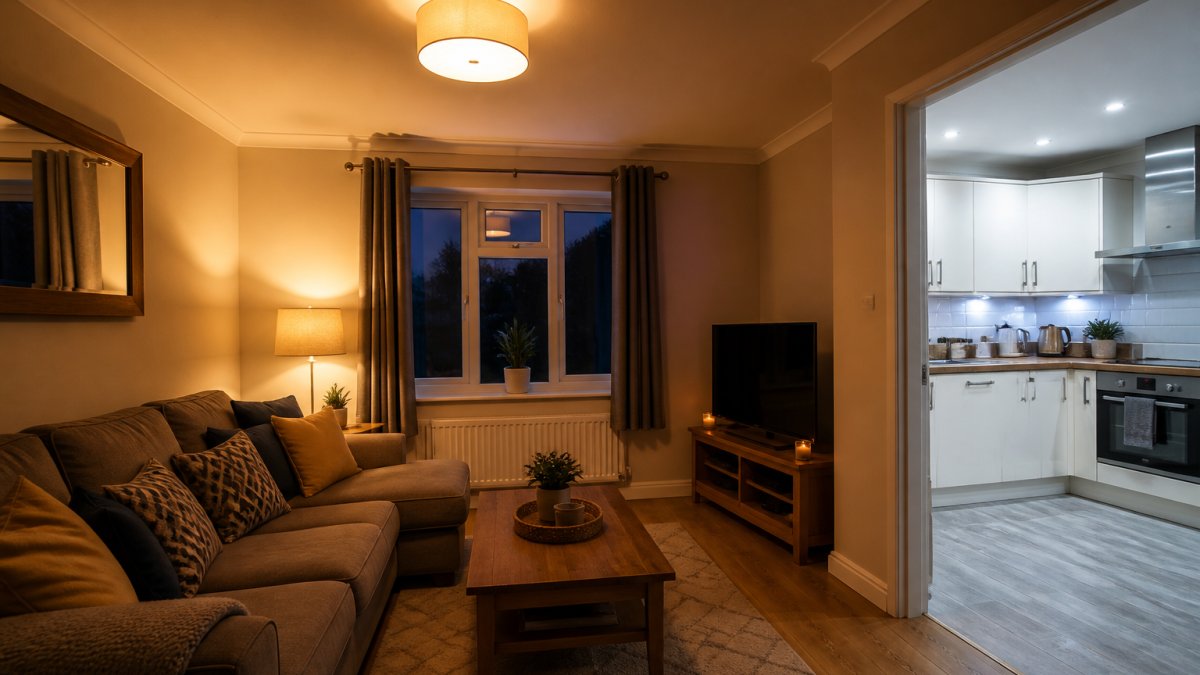
A warm white LED ceiling light glowing in a cosy UK living room in the evening, with a sofa, cushions and a side lamp, contrasted by a brighter cool white light visible through an open doorway into a kitchen
A few practical notes. Kitchens often need two layers: warm light for dining and cooler light over worktops. Bathrooms benefit from a cooler tone at the mirror for shaving or makeup. Bedrooms almost always want the warmest option you can get.
How to Choose LED Bulb Colour Temperature: A Simple Step-by-Step Method
Here is the method we walk customers through in store. It takes about two minutes.
Name the room’s main job. Relaxing, working, or seeing detail clearly.
Match the Kelvin to that job. Relaxing means 2700K. Working means 4000K.
Check your existing bulbs. If you are replacing one, match its Kelvin.
Think about the room’s finish. Warm whites flatter wood and warm paint. Cool whites suit grey and white schemes.
Buy one bulb first. Test it in the fitting before committing to a full set.
Stay consistent. Use the same Kelvin across an open-plan space.
Common Mistakes to Avoid
Mixing colour temperatures in one room
Assuming higher Kelvin means brighter light
Buying on wattage alone instead of checking lumens and Kelvin
Forgetting that dimming can shift how warm a bulb looks
Watch Out If you are swapping out old dimmer switches, check the bulb is marked as dimmable first. A non-dimmable LED on a dimmer circuit can flicker or buzz, and that is a bulb-versus-switch problem, not a faulty product.
::: Ensuring compatibility between your hardware and light sources remains just as critical when planning complex retail lighting solutions for commercial spaces.
Selectable Colour Temperature: One Fitting, Every Setting
If you cannot decide, buy a fitting that lets you change your mind later. Selectable colour temperature products let you switch between warm, neutral and cool light from the same unit.
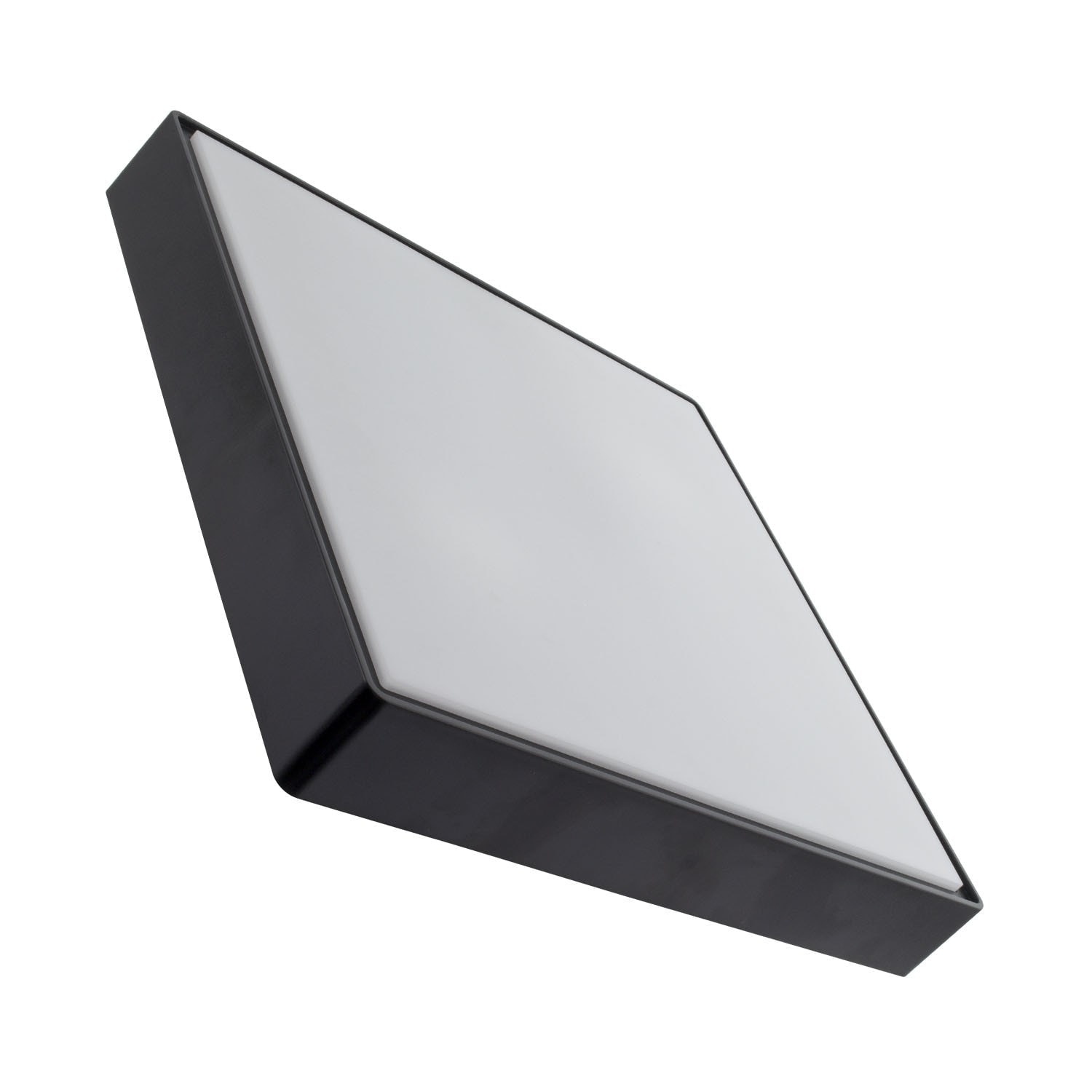
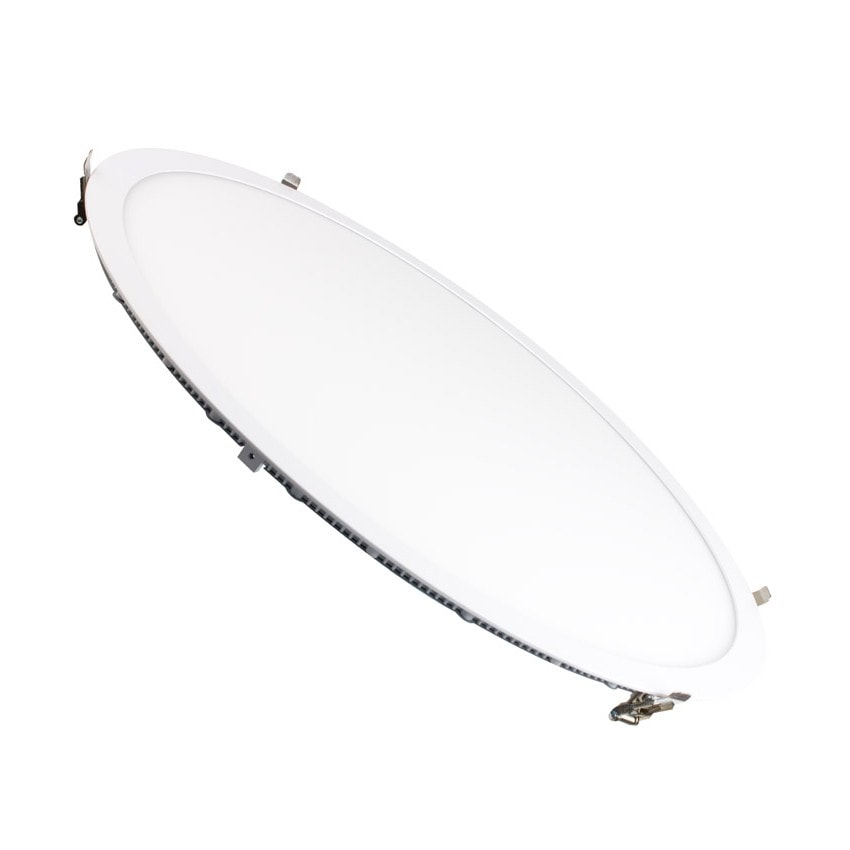
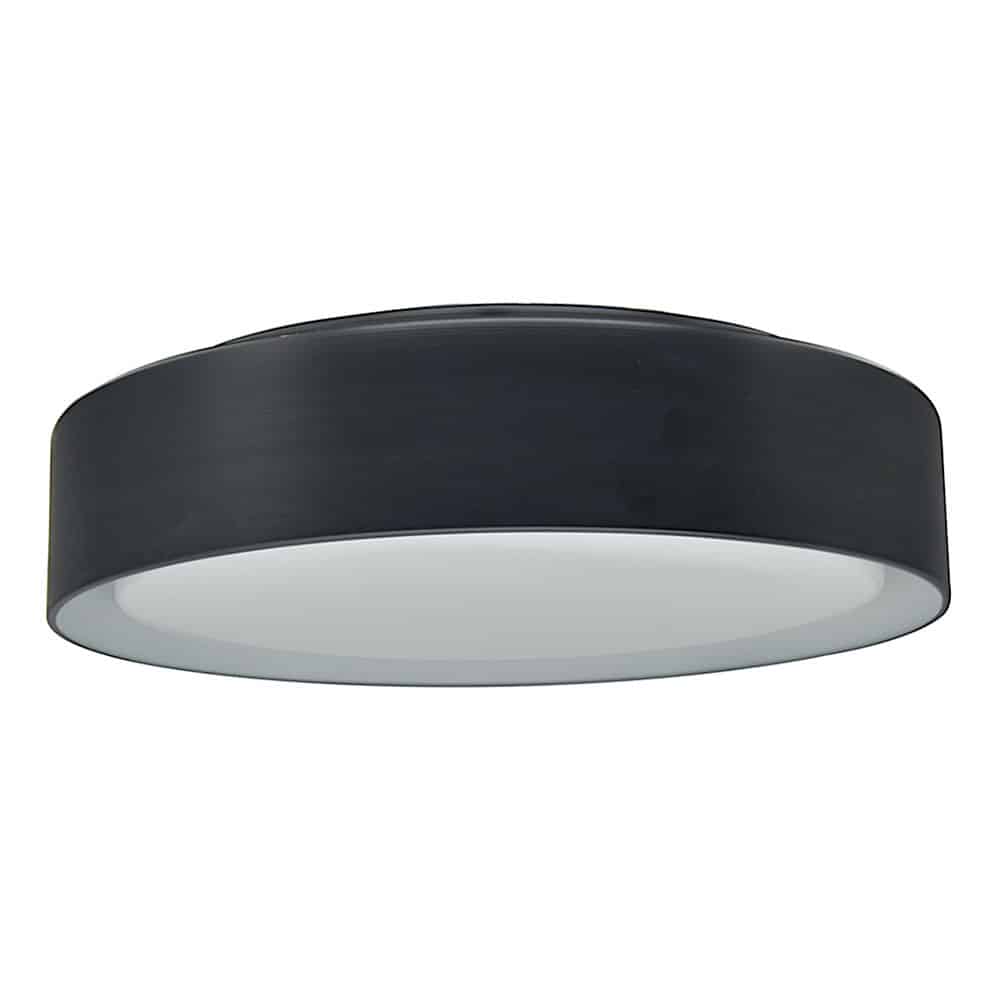
Round 18W LED Surface Panel with a Selectable Colour Temp. (Dimmable)
This is where a product like our Round 18W LED Surface Panel with a Selectable Colour Temp. (Dimmable) earns its keep. It runs from an inviting warm white through to a faded cool white, so one fitting can suit a living room, a kitchen or a workspace. It puts out 1700 lumens and comes with an IP20 rating for indoor use.
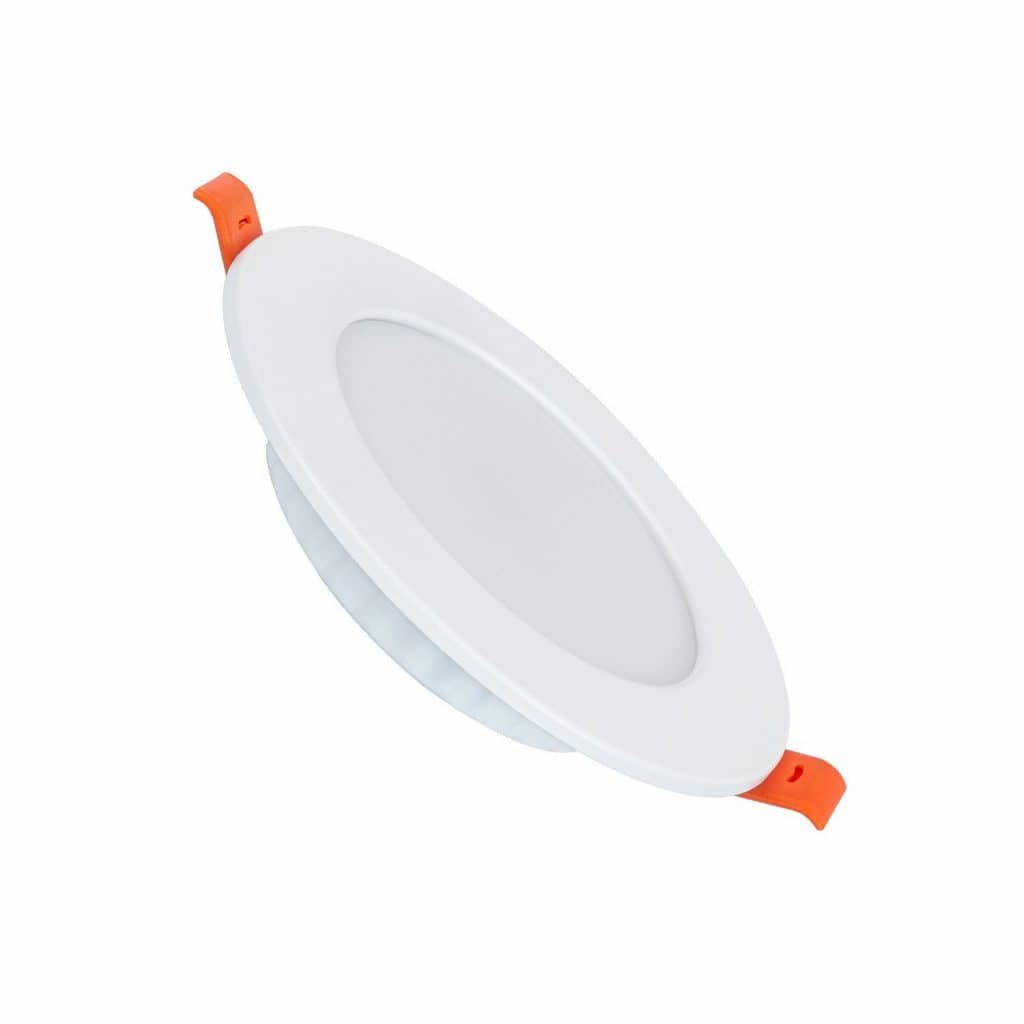
18W Led Slimline Downlight with CCT (3000k, 4000k, 6000k) & EM3
Anyone who wants one fitting to cover several rooms, or landlords and businesses lighting multiple spaces to the same standard.
Any fixed electrical work should be carried out by a suitably qualified electrician, and installations should meet current Building Regulations and British Standard wiring requirements. If you are unsure whether your existing circuit can take the load, get it checked before you buy.
Picking the right colour temperature is not complicated once you know the scale. Warm for relaxing, cool for working, and consistent within each room. If you would rather not choose at all, selectable fittings let you adjust as you go.
Ledlam stocks a wide range of LED lighting, from dimmable panels to slimline downlights, along with the switches, cables and accessories to finish the job.
Get started with Ledlam and light every room the way it should be lit.
Frequently Asked Questions
What colour temperature is best for LED bulbs at home?
Most homes work well with 2700K to 3000K in living rooms and bedrooms, and 4000K in kitchens, bathrooms and home offices. There is no single best figure for every room, because the right LED colour temperature depends on the task and the mood you want. A practical approach is to keep warm white in relaxation areas and cooler white where you need concentration, then check the Kelvin rating on the box before buying.
What is the difference between 2700K and 4000K LED bulbs?
A 2700K bulb gives a warm, yellowish light similar to traditional halogen, while 4000K produces a cooler, whiter light that makes details and colours easier to see. In practice, 2700K suits lounges, bedrooms and dining areas, and 4000K suits kitchens, utility rooms, garages and workspaces. The gap between them is noticeable, so mixing both on the same circuit can look uneven. Our LED bulb colour temperature chart above shows where each rating sits.
Can you mix different colour temperatures in one room?
You can, but the result is often patchy. Two bulbs of the same wattage but different Kelvin ratings will look mismatched even when they are equally bright. If you want variety in one room, use a fitting with selectable colour temperature, such as the Round 18W LED Surface Panel, so every light in the room can be set to the same value. Otherwise, replace bulbs in a room as a set rather than one at a time.
Does LED colour temperature affect brightness?
No. Colour temperature and brightness are separate measurements. Kelvin describes the colour of the light, while lumens describe how much light a bulb produces. A 2700K and a 4000K bulb of the same lumen output are equally bright, though the cooler one often appears brighter because of the whiter tone. When comparing bulbs, check the lumen figure first and the Kelvin rating second, then confirm the fitting type and dimming compatibility.