












9 LED Lighting Facts Every UK Buyer Should Know
Quick Summary
LED lighting uses a semiconductor to produce light, wasting far less energy as heat than incandescent and halogen bulbs. Most UK homeowners now choose it for lower electricity bills and longer-lasting fittings, so it is the sensible default for replacing older bulbs.
- Compare lumens rather than watts when replacing an older bulb, since lumens measure actual light output.
- Choose 3000K for living rooms and bedrooms, 4000K for kitchens and offices, and 6000K for workshops.
- Check the IP rating before fitting, because IP20 downlights suit dry internal rooms only.
- Confirm the circuit is isolated and check dimmer compatibility before retrofitting a new LED unit.
Table of Contents
- Why LED Lighting Has Replaced Older Bulbs in UK Homes
- LED Bulb Colour Temperature Guide: Choosing 3000K, 4000K or 6000K
- Lumens, Watts and Working Out the Brightness You Need
- IP Ratings for Bathroom Lighting: Which Fittings Are Safe Where
- How to Install LED Downlights Safely
- Dimmers, Flicker and Retrofitting Older Fittings
- Choosing Your LED Downlights From Ledlam
- Frequently Asked Questions
9 LED Lighting Facts Every UK Buyer Should Know
Last Updated: October 30, 2026
Why LED Lighting Has Replaced Older Bulbs in UK Homes
LED lighting is the default choice for most UK households now, and the reasons are practical rather than fashionable.
Most people start with a single bulb that has failed in a hallway, then find they are replacing the whole house. That is a sensible move.
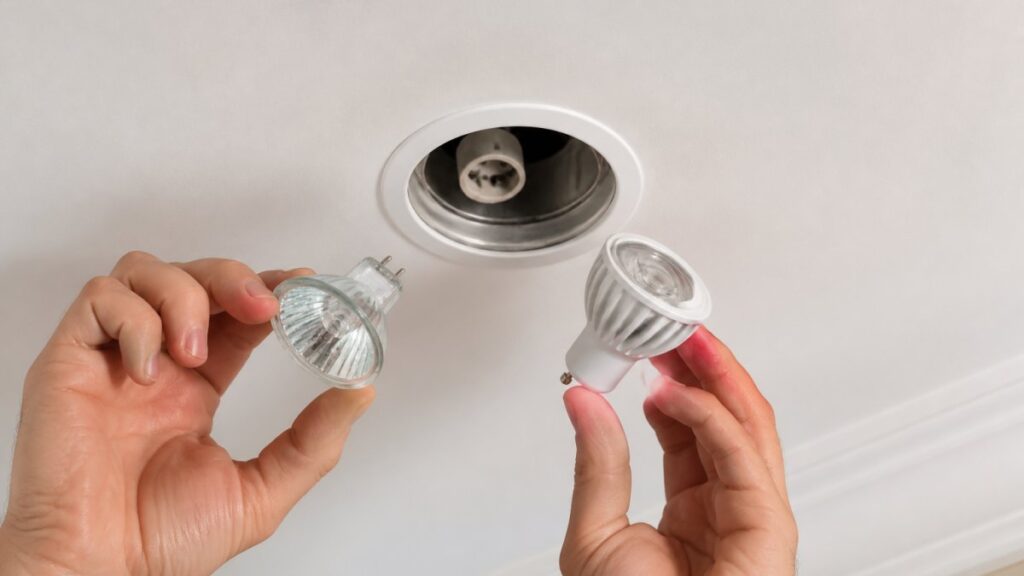
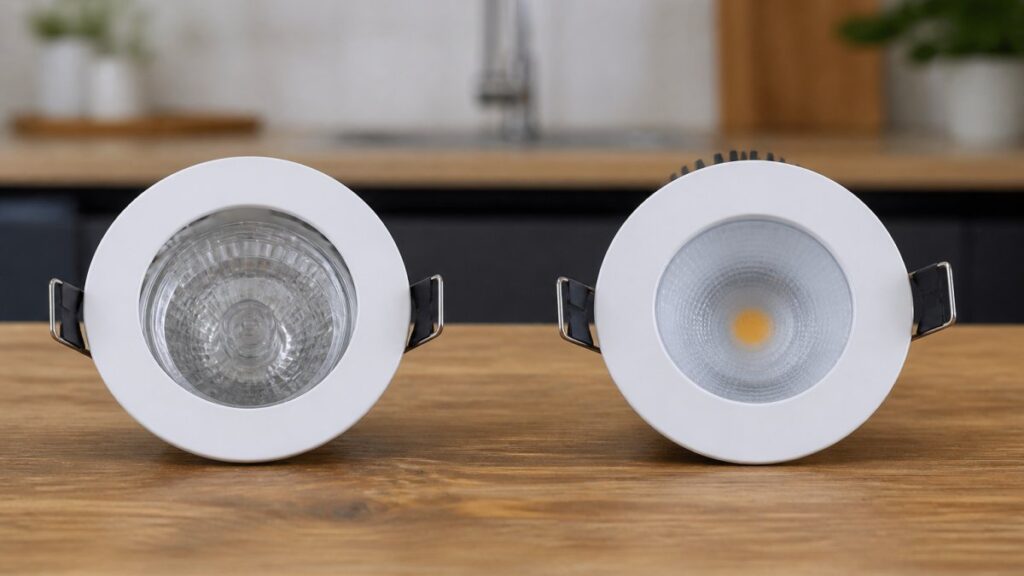
Halogen downlights are the usual target for swapping out. If you want the full process for swapping them, our guide on how to replace halogen bulbs with LED walks through it step by step.
Watch out: LED downlights need a compatible driver and fitting, so check the product specification before you assume an old halogen fitting will take a new unit.
LED Bulb Colour Temperature Guide: Choosing 3000K, 4000K or 6000K
Colour temperature, measured in kelvin (K), describes how warm or cool the light looks. A lower figure gives a warmer, yellowish glow, while a higher figure gives a cooler, bluer white.
For living rooms and bedrooms, 3000K is the most common choice because it feels closer to traditional bulbs. Kitchens, utility rooms and home offices often suit 4000K, which gives clearer, more neutral light for tasks. 6000K works well in workshops, garages and spaces where you need to see fine detail.
Because the same downlight can switch between all three settings, you do not have to commit before you have lived with it. Try a setting for a few days, then change it if the room feels too cold or too yellow. For a deeper look at choosing colour temperature, see our LED bulb colour temperature guide.
Lumens, Watts and Working Out the Brightness You Need
Watts tell you how much electricity a bulb uses, not how bright it is. Lumens measure the light output itself, and that is the figure to compare when you are replacing an older bulb.
If you are unsure, start with the mid-range option and add a second unit if the space feels dim. It is far easier to add light than to take it away.
The table below summarises the brightness figures and the lumens-per-square-metre guidance from this section.
| Item | Value | Note |
|---|---|---|
| Watts | Electricity used | Not a measure of brightness |
| Lumens | Light output | The figure to compare when replacing bulbs |
| General lighting target | 100 to 150 lumens per square metre | Multiply by the room’s floor area |
| Product wattage range | 6W to 18W | Mix sizes across a room |
| Starting point | Mid-range option | Add a second unit if the space feels dim |
IP Ratings for Bathroom Lighting: Which Fittings Are Safe Where
An IP rating shows how well a fitting resists dust and water. The first digit covers solids and the second covers liquids, so IP20 means protected against fingers but not against water.
Bathrooms and shower areas are different. Check the current requirements in BS 7671, the UK wiring regulations, and seek advice from a qualified electrician before fitting anything in a bathroom (BS 7671 – Requirements for Electrical Installations).
Where a fitting needs a higher rating, choose a product certified for that location rather than relying on the general guidance here.
How to Install LED Downlights Safely
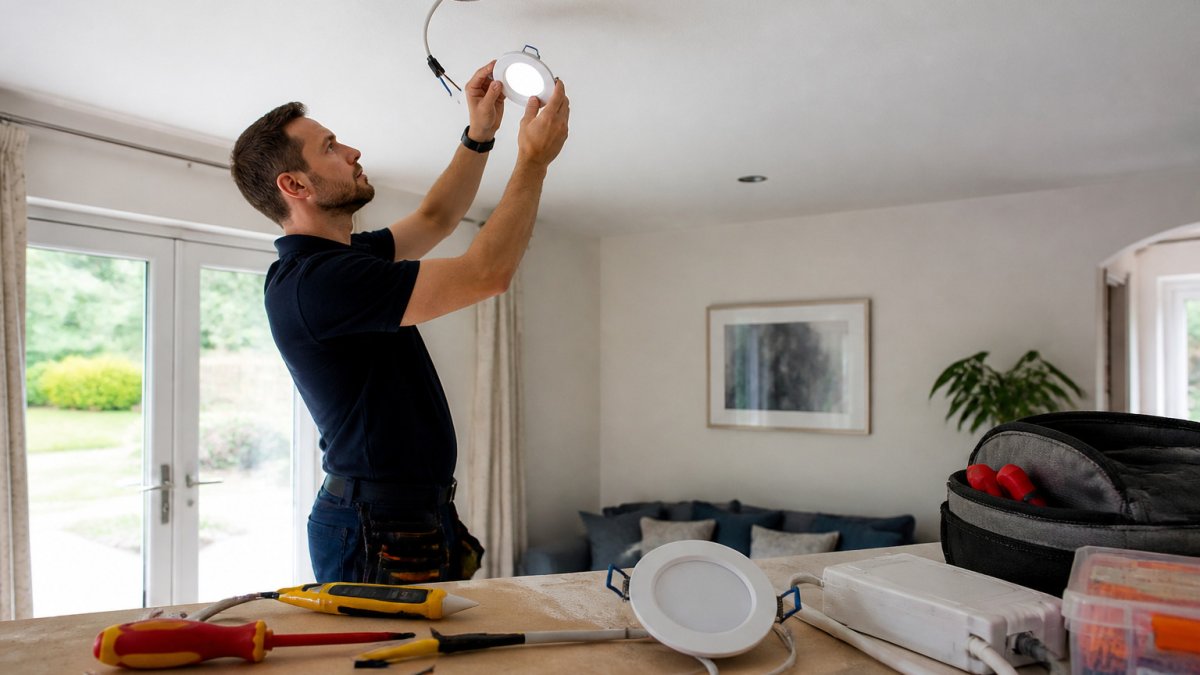
Installing LED downlights is a manageable job for a competent DIYer, but mains electricity carries real risk and the legal position depends on the work involved. The guidance below separates what the law requires from recognised standards and general best practice, so you can judge what applies to your situation.
Before you start: isolation and verification
Switch off the circuit at the consumer unit, lock off or tag the breaker where possible, and confirm the circuit is dead with a voltage tester at the point of work, not just at the switch. Keep the power off until the work is finished. A common pattern among electricians is to prove the tester on a known live source before and after the dead test, so a faulty tester cannot give a false all-clear.
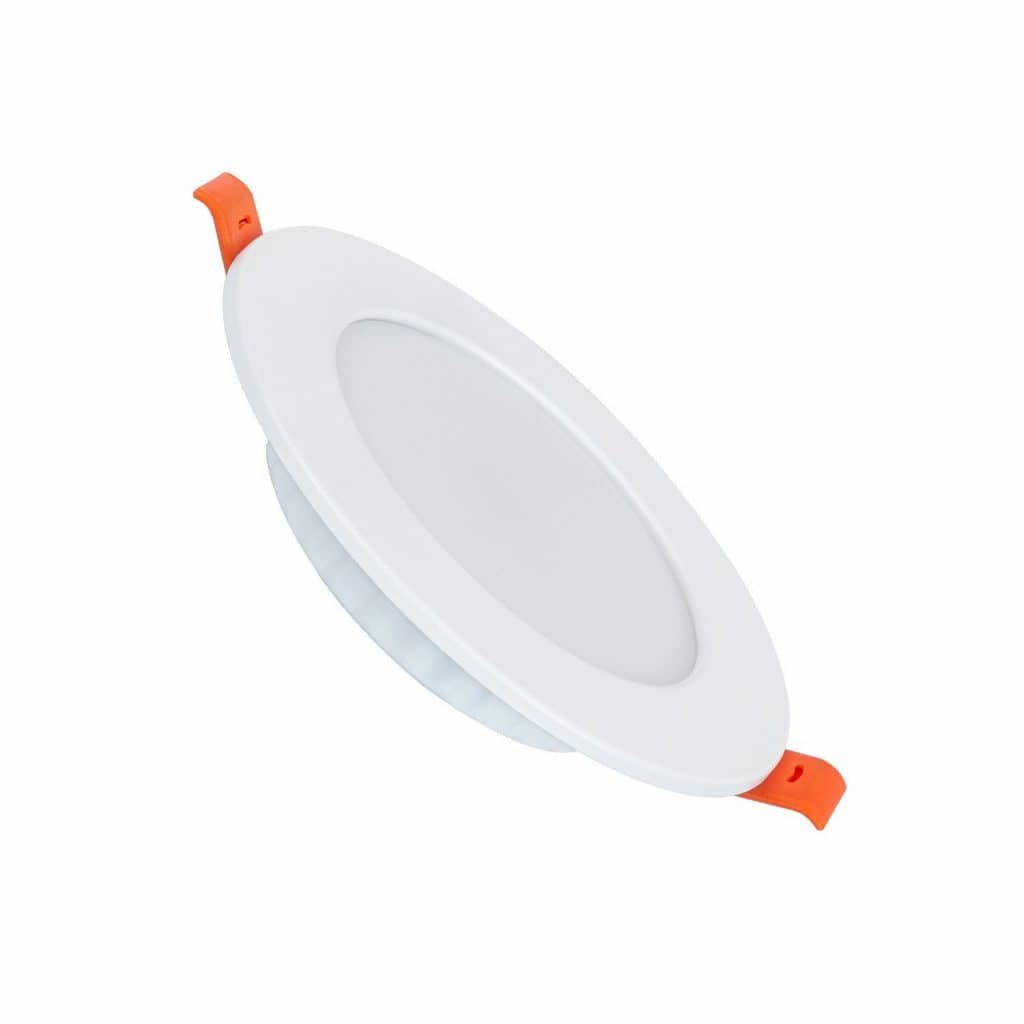
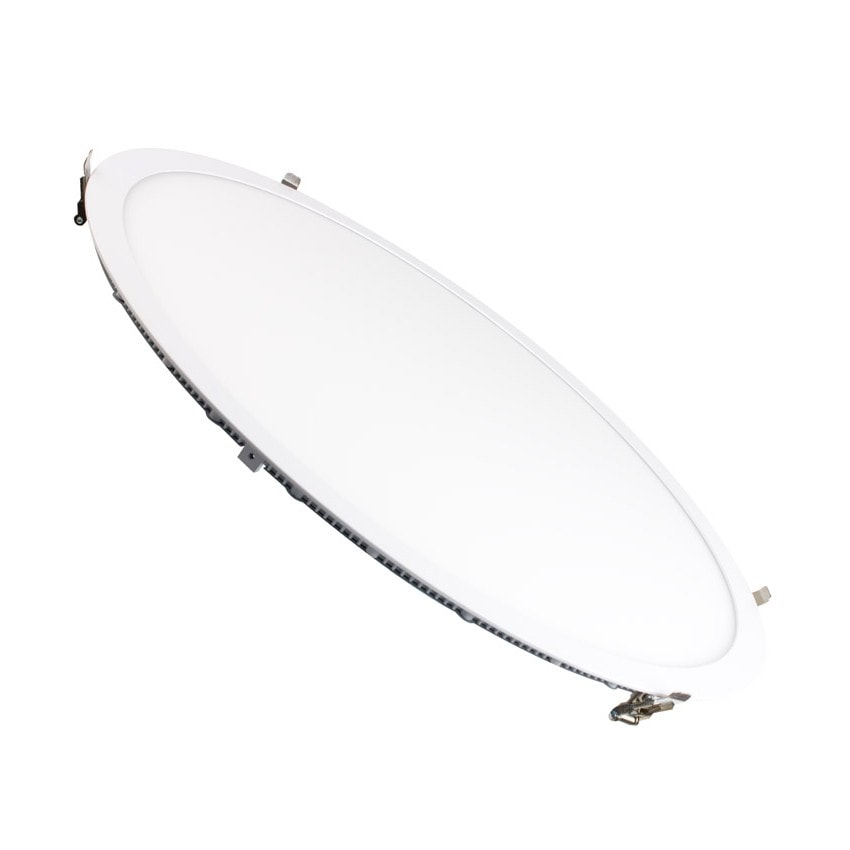
18W Led Slimline Downlight with CCT (3000k, 4000k, 6000k) →
Watch Out
Never work on a fitting you have not confirmed is isolated, even if the switch appears to be off. Lighting circuits are often shared, and a second switch or a borrowed neutral can leave a conductor live.
Never work on a fitting you have not confirmed is isolated, even if the switch appears to be off. Lighting circuits are often shared, and a second switch or a borrowed neutral can leave a conductor live.
Cutting and connecting
Cut the ceiling hole to the size specified for your fitting, downlight cut-outs are not interchangeable, and an oversized hole may need a conversion plate. Connect the live, neutral and earth conductors to the driver exactly as the manufacturer’s instructions show. Many slimline LED downlights are Class II (double-insulated) and do not require an earth connection at the fitting, but the earth conductor in the circuit must still be terminated safely; check the product specification rather than assuming. Test the light before you refit the cover.
Retrofitting versus new installation
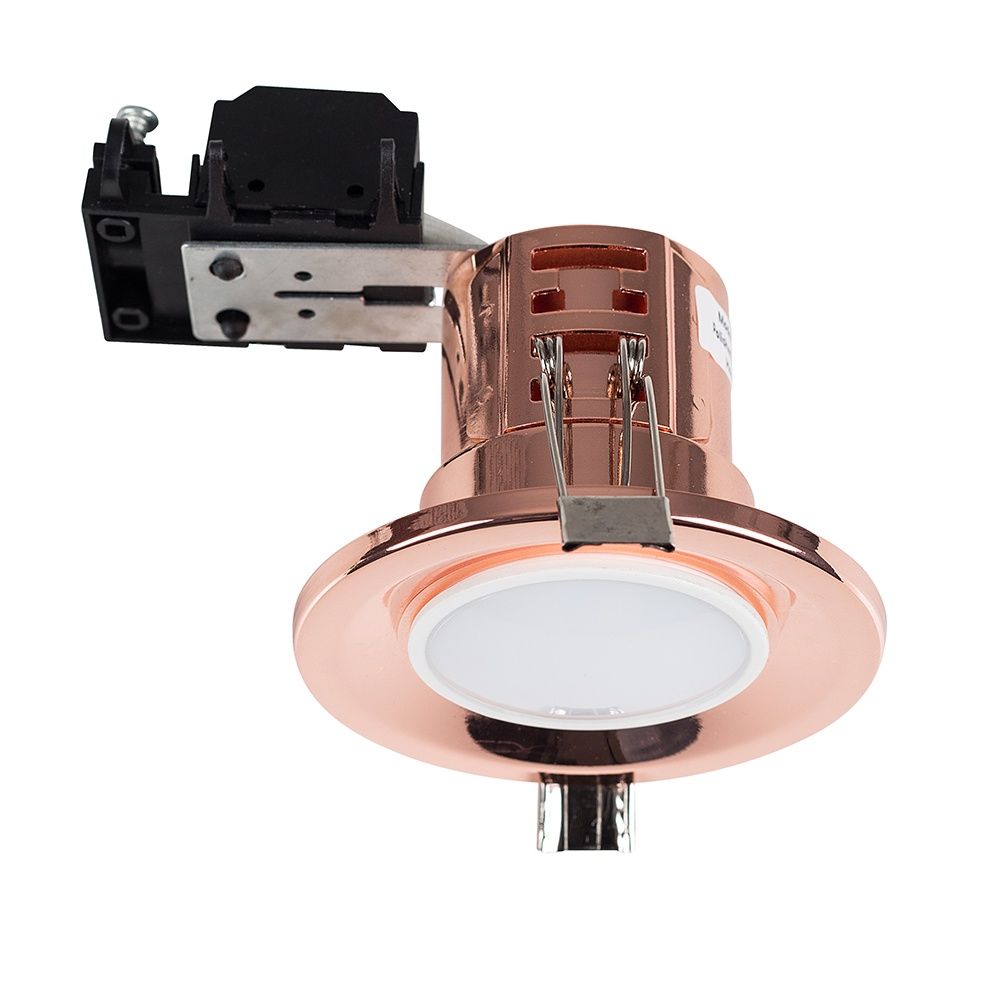
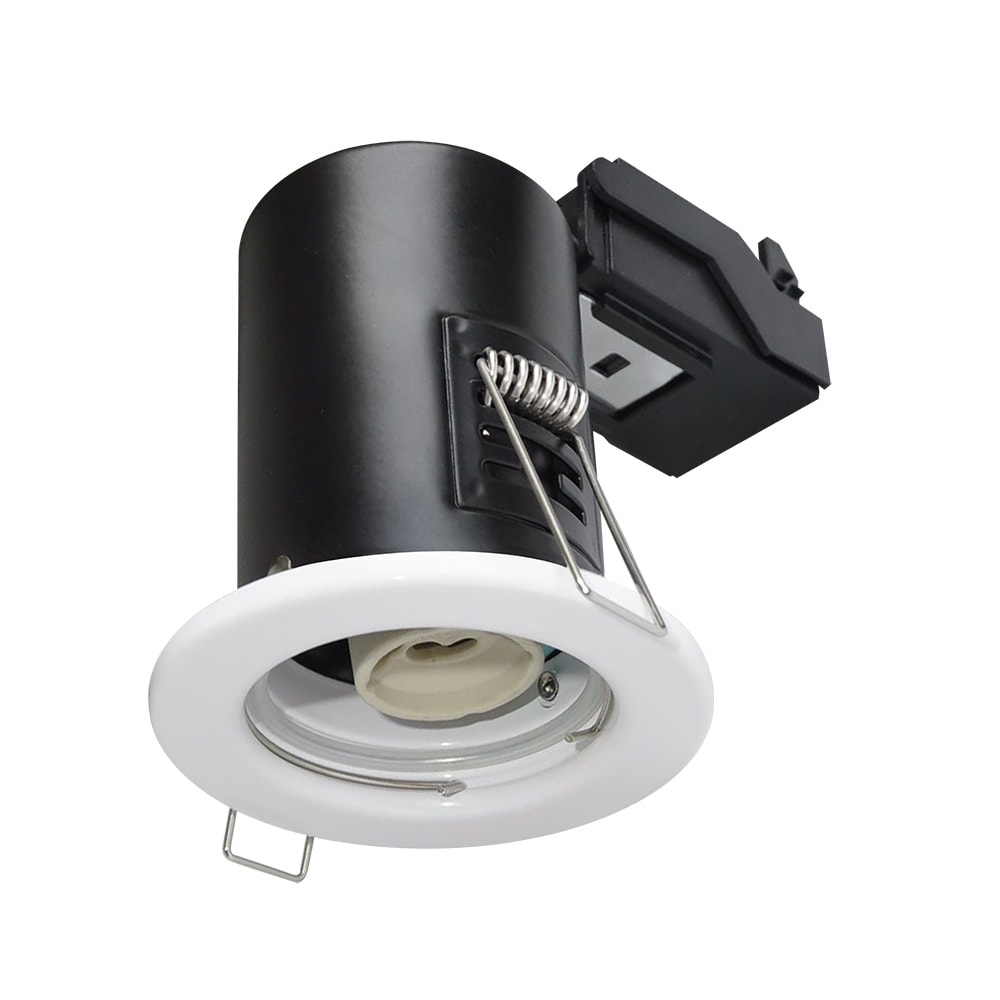
Retrofitting an LED unit into an existing halogen downlight aperture is usually straightforward when the new unit matches the cut-out size and mounting method, but there are three things to check first:
- Driver compatibility. Halogen fittings often run on 12V transformers; an LED unit may need a compatible LED driver, and mixing the two can cause flicker or early failure. Our downlights are supplied with a free LED driver matched to the fitting.
- Insulation and fire rating. Recessed downlights in ceilings with loft insulation above need to be rated for the insulation contact or protected by a suitable hood. Fire-rated ceilings (for example, between a garage and a habitable room) require fire-rated fittings to maintain the compartment, check the product data and the building’s fire strategy.
- Cable condition. Older wiring may be brittle or undersized; if the existing cable is damaged or the circuit is old, have it inspected before fitting new units.
New installation, running new circuits or adding fittings to a circuit, is a different proposition from a like-for-like swap and is more likely to be notifiable work.
Building Regulations and notifiable work
In England and Wales, Part P of the Building Regulations covers electrical work in dwellings and requires that reasonable provision be made for safety (Electrical safety: Approved Document P). Not all work is notifiable: like-for-like replacement of a damaged accessory is generally not notifiable, whereas adding a new circuit or work in a special location (such as a bathroom) usually is. The exact scope depends on the premises and the work, so confirm the current position before starting.
Pro Tip
If you are unsure whether your job is notifiable, ask a registered electrician or your local building control body before you start. It is far cheaper to confirm than to remediate.
If you are unsure whether your job is notifiable, ask a registered electrician or your local building control body before you start. It is far cheaper to confirm than to remediate.
Disposal of the old fittings
Old halogen lamps and LED units are waste electrical and electronic equipment (WEEE) and should not go in general household waste (Regulations: Waste Electrical and Electronic Equipment (WEEE)). Retailers that supply electrical goods often offer take-back under the WEEE Regulations, and local household waste recycling centres accept small electrical items.
If you are not confident with any stage, or the work involves new circuits or notifiable work, employ a registered electrician. For the swap itself, our guide on how to replace halogen bulbs with LED walks through the process step by step, and our slimline LED downlight range lists the cut-out sizes and driver details you need before you buy.

Dimmers, Flicker and Retrofitting Older Fittings
Most LED dimming problems come down to compatibility between three things: the dimmer, the LED driver and the load. Understanding the mechanism helps you diagnose a fault instead of replacing parts at random.
Why LEDs flicker on the wrong dimmer
Older rotary and leading-edge dimmers were designed for resistive incandescent loads and switch the mains abruptly. LED drivers are electronic and draw current differently, so an incompatible pairing can cause flicker, buzzing, a limited dimming range or early driver failure. Trailing-edge dimmers are generally gentler on LED drivers, but the reliable approach is to check the product specification for a stated dimmer compatibility list and a minimum load, then match the dimmer to it. If the dimmer is the problem, replacing it is usually the fix, not replacing the bulb.
Flicker and eye strain
Flicker is not only annoying; it is a recognised comfort issue. Some LED drivers regulate current in a way that produces a rapid modulation of light output, which is invisible to most people at high frequencies but can cause headaches, eye strain and fatigue in sensitive individuals, particularly under task lighting in a home office. A common pattern is that cheaper drivers show more modulation than better-regulated ones. When choosing a fitting for a desk or study, look for products described as flicker-free or low-flicker, and prefer a reputable driver over the lowest-cost option.
Key Takeaway
For home offices and reading areas, prioritise driver quality and a compatible dimmer over headline wattage. A stable, flicker-free light is easier on the eyes than a brighter one that modulates.
For home offices and reading areas, prioritise driver quality and a compatible dimmer over headline wattage. A stable, flicker-free light is easier on the eyes than a brighter one that modulates.
Retrofitting older fittings
Retrofitting is usually straightforward when the new unit matches the fitting’s cut-out size and mounting method, but check the driver, the insulation and fire rating, and the cable condition first, as covered in the installation section above. Where the fitting is damaged or the wiring is old, have it inspected before you fit a new unit.
Our 12W slimline downlight is a good mid-range choice for rooms where you want dimmable, colour-switchable light, and the 9W version suits smaller spaces. Check the product page for dimmer compatibility before ordering, and if you are unsure, ask us before you buy.


Choosing Your LED Downlights From Ledlam
Ledlam stocks slimline LED downlights with CCT switching between 3000K, 4000K and 6000K, so you can choose the colour that suits each room.
Prices start from £11.99 for the 6W model, £14.99 for the 9W and 12W models and £16.99 for the 18W. Order online from our LED range, or visit our Basildon Market shop if you want to see the downlights in person before you buy. Check our current LED offers before you order.
Frequently Asked Questions
What is the main disadvantage of LED lights?
The main drawback is the higher upfront cost compared with traditional bulbs, although LED fittings usually recover that cost through lower electricity use and longer life. Cheap LED products can also flicker, fail early or perform poorly with older dimmer switches, so buying from a reputable supplier with clear specifications matters. Checking the lumen output, colour temperature and driver quality before purchase helps avoid these problems. Ledlam’s slimline downlights, for example, come with a driver included and are sold in 3000K, 4000K and 6000K options.
What are the three types of LED lights?
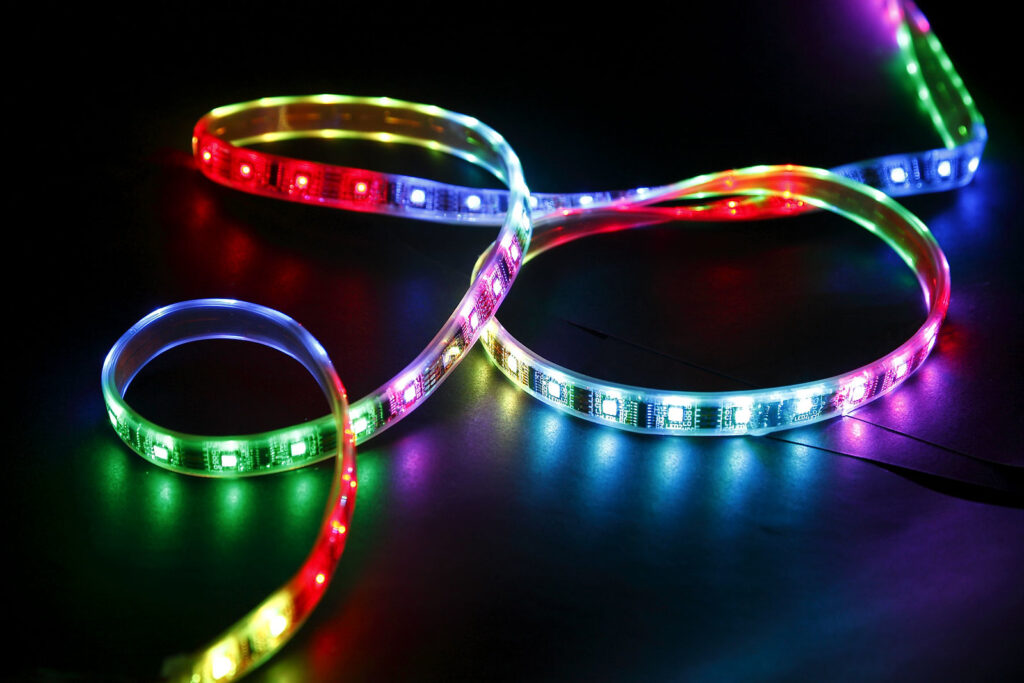
LED lighting is commonly grouped by use rather than by a formal three-type classification: general-purpose bulbs for replacing standard lamps, fixed fittings such as downlights and panel lights, and flexible or linear products such as LED strip lights. Each suits a different job. Bulbs fit existing lamp holders, downlights are installed into ceilings, and strips are used for accent or under-cabinet lighting. Choosing by fitting type first and then by colour temperature and brightness keeps the decision simple.
How do I choose the right colour temperature for my home?
Colour temperature is measured in kelvin. 3000K gives a warm white suited to living rooms and bedrooms, 4000K gives a neutral cool white that works well in kitchens and hallways, and 6000K gives a daylight-style light suited to workspaces and garages. Many Ledlam downlights offer all three settings on one fitting, so you can test which suits the room before settling on a colour. The LED bulb colour temperature guide above explains each option in more detail.
Are LED lights compliant with current UK Building Regulations?
LED lights are not themselves regulated by a single rule, but the installation must comply with Part P of the Building Regulations for England and Wales, which covers electrical safety in dwellings, and with BS 7671, the Requirements for Electrical Installations (IET Wiring Regulations). Work on fixed mains wiring should be carried out by a competent person, and in many cases notified to building control. Requirements can vary by premises and by nation, so check with a qualified electrician or your local building control team before starting any work.