











Halogen vs LED Downlights: Energy Savings Guide
Table of Contents
- Halogen vs LED Downlights: Key Differences
- LED vs Halogen Wattage Comparison
- Energy Consumption and Running Costs
- Halogen to LED Energy Savings Calculator
- How to Replace Halogen Downlights with LED
- Dimmable LED Downlights and Compatibility
- Choosing the Right LED Downlight for Your Home
- Conclusion
- Frequently Asked Questions
Last Updated: 10 October 2026
Halogen vs LED Downlights: Key Differences
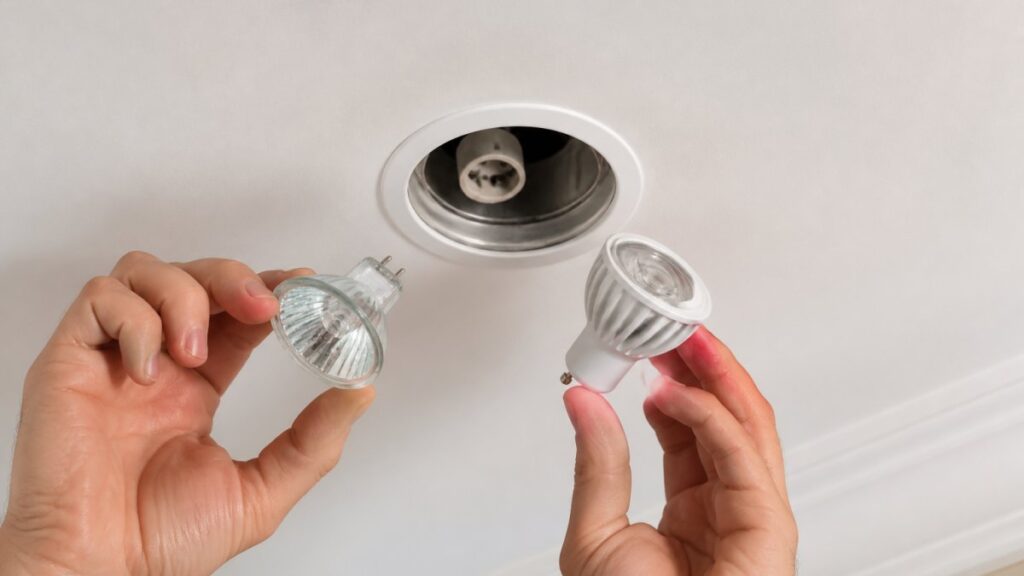
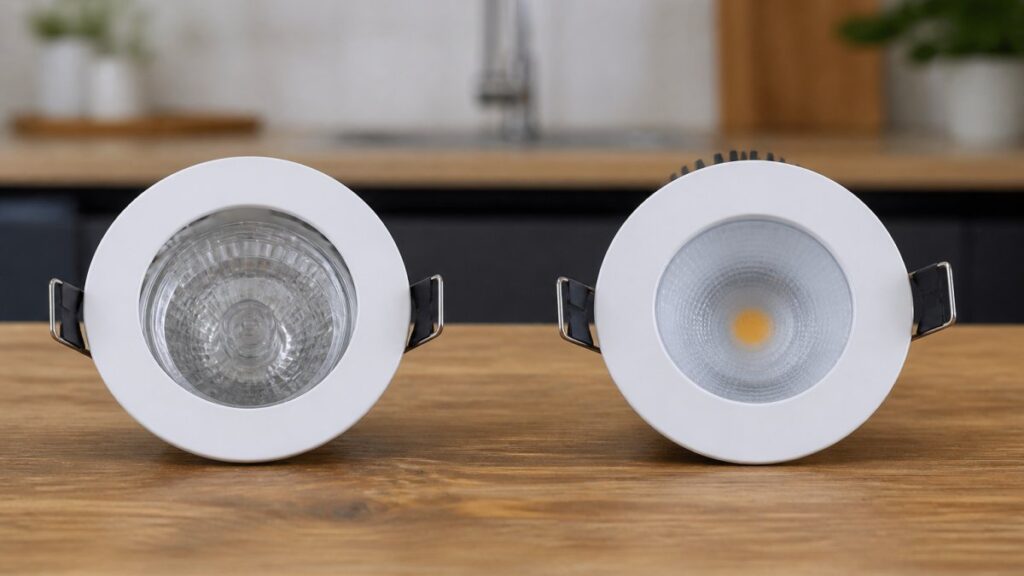
When you’re comparing halogen vs LED downlights, you’re essentially weighing two different technologies for recessed ceiling lighting. Halogen downlights have been the standard for decades, using heated filaments to produce light. LED downlights, by contrast, use semiconductor diodes to generate light with far less heat and energy waste.
At Ledlam, we’ve helped thousands of UK homeowners and businesses make this switch. The core advantage of LED technology is efficiency: an LED downlight using just 5-18 watts can match or exceed the brightness of a 50-120 watt halogen equivalent. This isn’t marginal, it’s a fundamental shift in how ceiling lighting works.
The practical difference shows up immediately in your electricity bill. Because halogen bulbs convert most of their energy into heat rather than light, they waste significant power. LED downlights redirect nearly all their energy output into actual illumination, making them far more cost-effective over time.
Beyond energy savings, there are other key distinctions. Halogen bulbs typically last 2,000-4,000 hours before failing. LED downlights often run for 25,000-50,000 hours or more, meaning you replace them far less frequently. This translates to lower maintenance costs, especially in commercial settings where changing bulbs requires scaffolding or cherry pickers.
LED vs Halogen Wattage Comparison
The wattage difference between these technologies is where the real story emerges. A 50-watt halogen downlight produces roughly the same light output as a 5-watt LED downlight. This 10:1 power ratio is consistent across most recessed downlight ranges.
Here’s how the comparison breaks down for common installations:
| Halogen Wattage | LED Equivalent | Power Reduction | Light Output (Lumens) |
|---|---|---|---|
| 50W | 5W | 90% less | 400-500 |
| 75W | 7-9W | 88-91% less | 600-700 |
| 100W | 9-12W | 88-91% less | 800-1000 |
| 120W | 18W | 85% less | 1400+ |
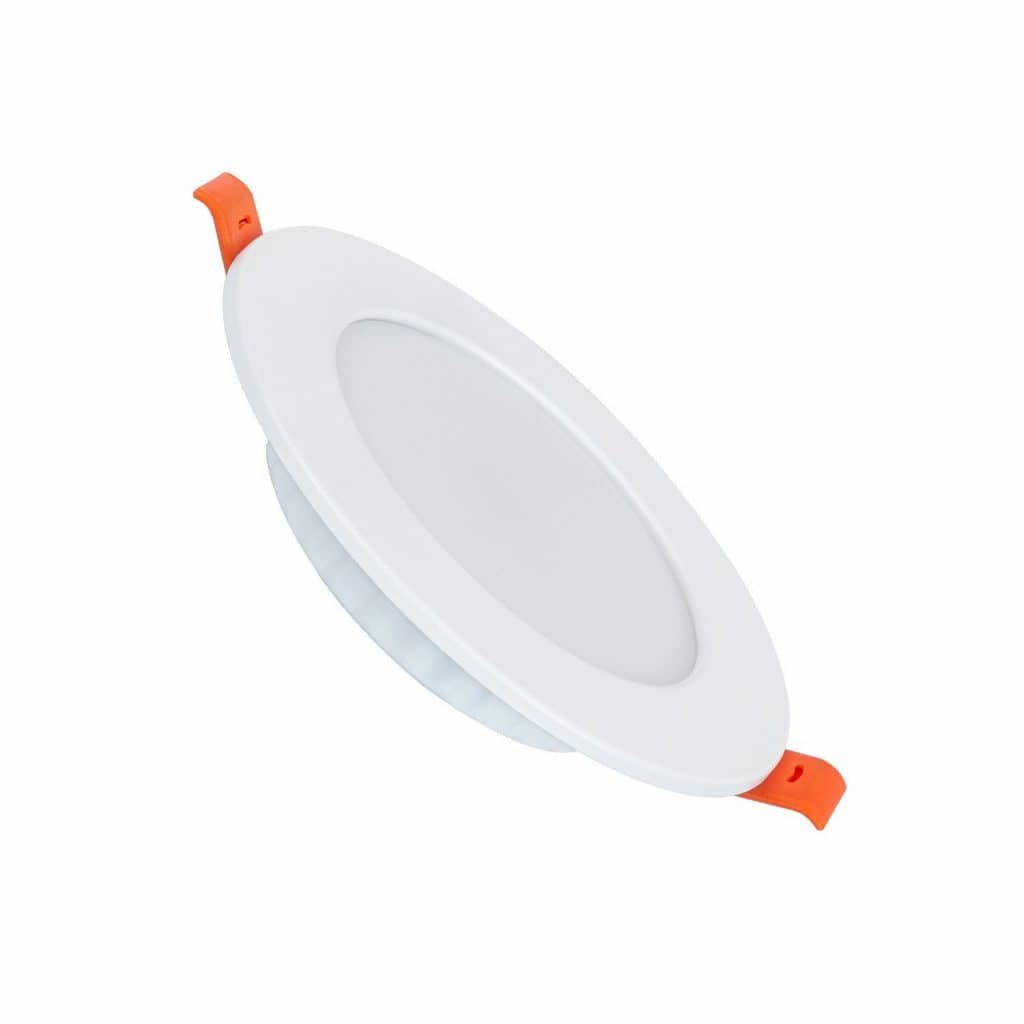
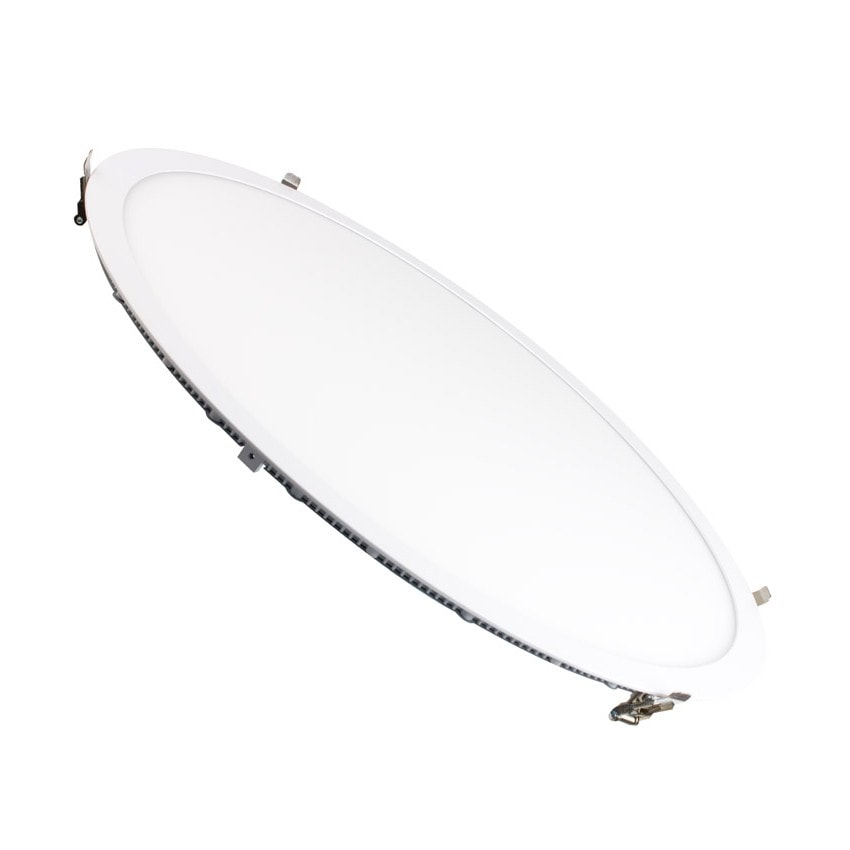
The Ledlam Downlight LED 5W Tilt 500DPD, for example, uses just 5 watts to replace a traditional 50-watt halogen fixture. The 18W COB model handles 120-watt halogen replacements. This wattage reduction is the primary driver of energy savings.

Understanding wattage matters because it directly affects your electricity consumption. Lower wattage means lower running costs, and the difference compounds when you have multiple downlights installed. A typical living room might have 6-10 downlights; switching those from halogen to LED can reduce energy use by 85-90% for that single room’s lighting.
The wattage comparison also reveals why LED downlights generate so little heat. Halogen bulbs waste energy as infrared radiation; LEDs convert that wasted energy into actual visible light. This efficiency is why LED downlights stay cool to the touch even after hours of operation.
Energy Consumption and Running Costs
Energy consumption is where halogen vs LED downlights shows its clearest financial advantage. To understand your potential savings, you need three pieces of information: wattage, daily usage hours, and your local electricity rate.
The average UK household electricity rate is approximately 24p per kWh (this varies by region and supplier). Using this baseline, here’s what annual running costs look like:
6 downlights running 5 hours daily:
- Halogen (6 × 50W): 1.5 kWh daily = 547.5 kWh annually = approximately £131 per year
- LED (6 × 5W): 0.15 kWh daily = 54.75 kWh annually = approximately £13 per year
- Annual savings: approximately £118
Over a 10-year period, that’s £1,180 in energy savings alone from just six downlights. Add more fixtures or increase daily usage hours, and the savings grow proportionally.
Commercial properties can see even greater benefits. An office with multiple downlights running for extended hours daily would see substantial annual savings by switching to LED, leading to significant reductions in electricity costs over the lifespan of the building.
The running cost advantage extends beyond electricity. Because LED downlights last 30 times longer than halogen equivalents, you spend less on replacement bulbs and labour. In commercial settings where downlight changes require specialist access equipment, this maintenance saving is substantial.
Key Takeaway
A typical 6-downlight installation saves approximately £118 per year in electricity costs by switching from halogen to LED, with the advantage increasing significantly in larger installations or higher-usage environments.
Halogen to LED Energy Savings Calculator
To calculate your specific energy savings, use this straightforward method:
Step 1: Count your downlights and identify wattage
Check your existing halogen bulbs or documentation. Common ratings are 50W, 75W, 100W, or 120W.
Step 2: Estimate daily usage hours
How many hours per day do these lights typically run? Residential kitchens might average 4-6 hours. Living rooms often run 3-5 hours. Commercial spaces might run 8-12 hours.
Step 3: Calculate daily kWh consumption
Multiply: (number of downlights × wattage ÷ 1000) × daily hours = daily kWh
Step 4: Apply your electricity rate
Daily kWh × 365 days × your rate per kWh = annual cost
Example calculation (6 × 50W halogen, 5 hours daily, 24p/kWh):
- Daily consumption: (6 × 50 ÷ 1000) × 5 = 1.5 kWh
- Annual consumption: 1.5 × 365 = 547.5 kWh
- Annual cost: 547.5 × £0.24 = £131.40
For LED equivalent (6 × 5W):
- Daily consumption: (6 × 5 ÷ 1000) × 5 = 0.15 kWh
- Annual consumption: 0.15 × 365 = 54.75 kWh
- Annual cost: 54.75 × £0.24 = £13.14
Annual savings: £118.26
This calculation works for any combination of downlights and usage patterns. The key insight is that energy savings scale directly with the wattage reduction, typically 85-90% for LED replacements.
Pro Tip
Use your actual electricity rate from your latest bill rather than the average. Regional variations and supplier differences can shift savings by 10-15%. Also factor in seasonal variation: winter months typically see higher daily usage for artificial lighting.
How to Replace Halogen Downlights with LED
Replacing halogen downlights with LED involves several straightforward steps, though the process depends on your existing fixtures and whether you’re comfortable working at height.
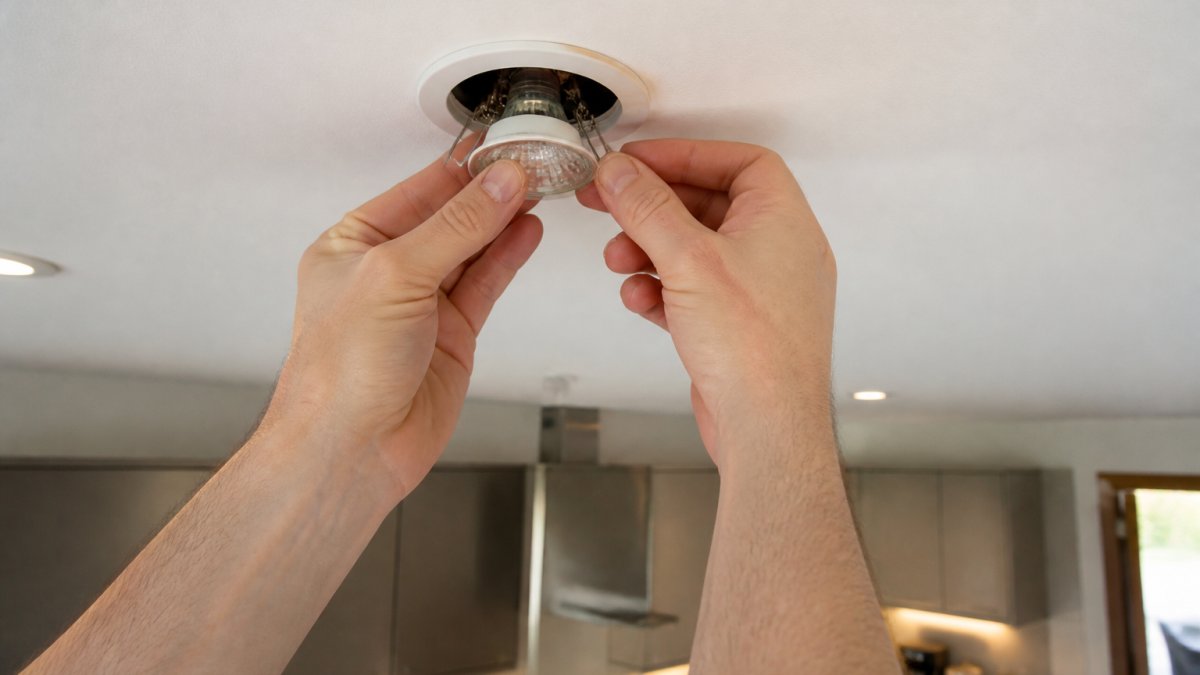
Safety first: turn off the power at the circuit breaker before touching any fixture. Halogen bulbs get extremely hot during operation, so allow fixtures to cool completely before attempting removal.
Downlight LED 18W COB 1400DP →
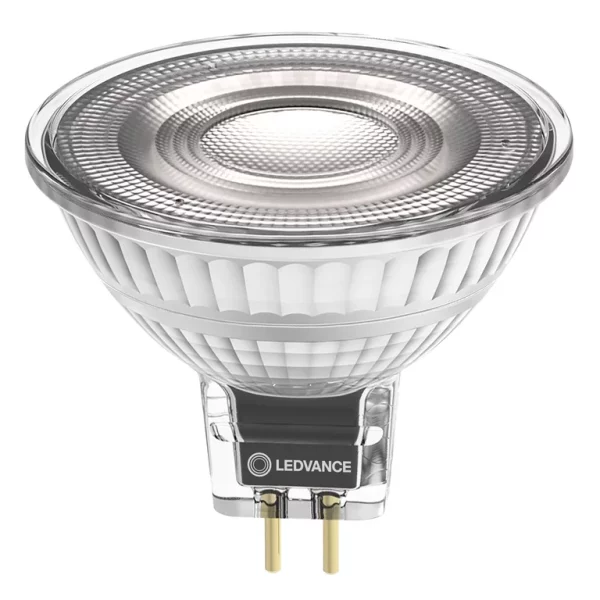
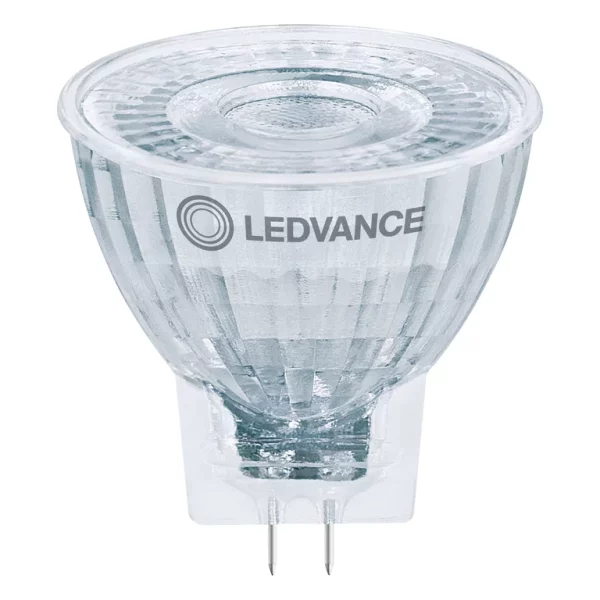
For simple bulb replacement: If your existing downlight fitting accepts standard GU10 or MR16 bulbs, you can simply unscrew the old halogen bulb and insert an LED equivalent. The Ledlam GU10 6W LED Bulb AC DC 12V is designed for exactly this application, offering 80% energy savings compared to conventional halogen.

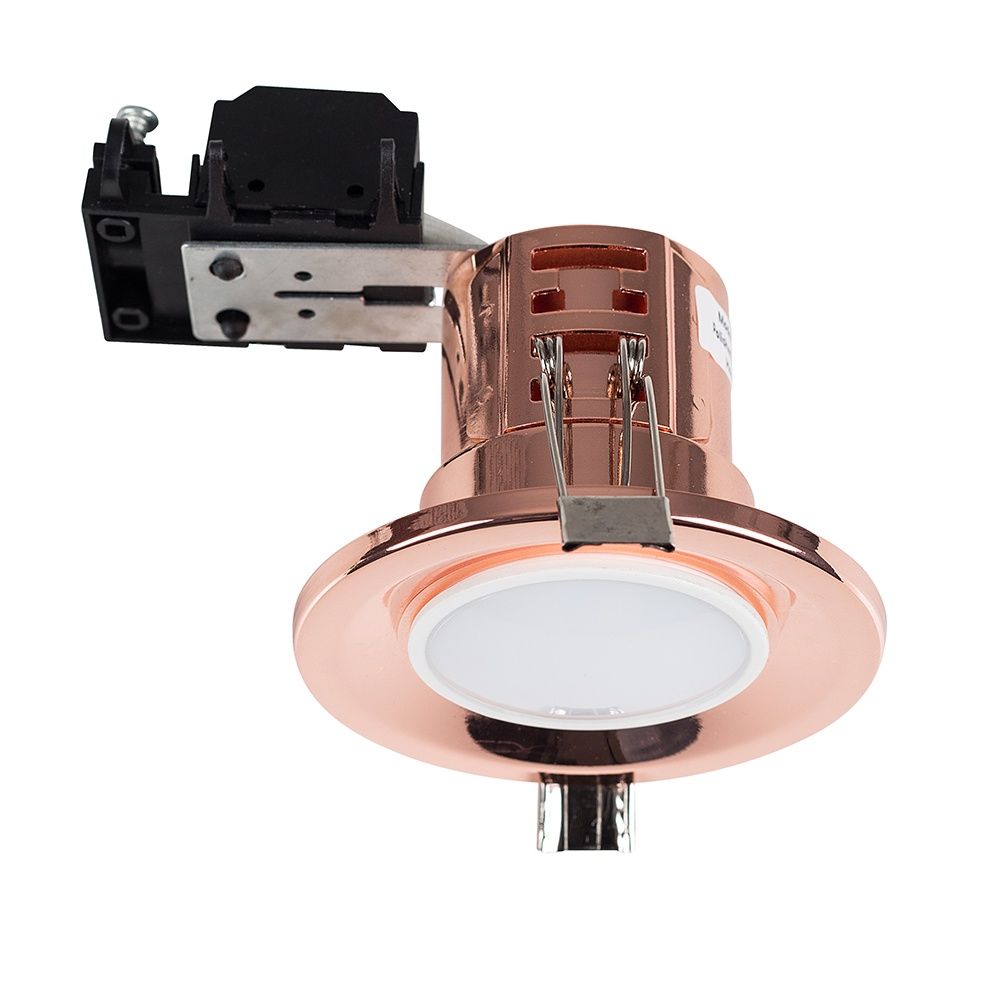
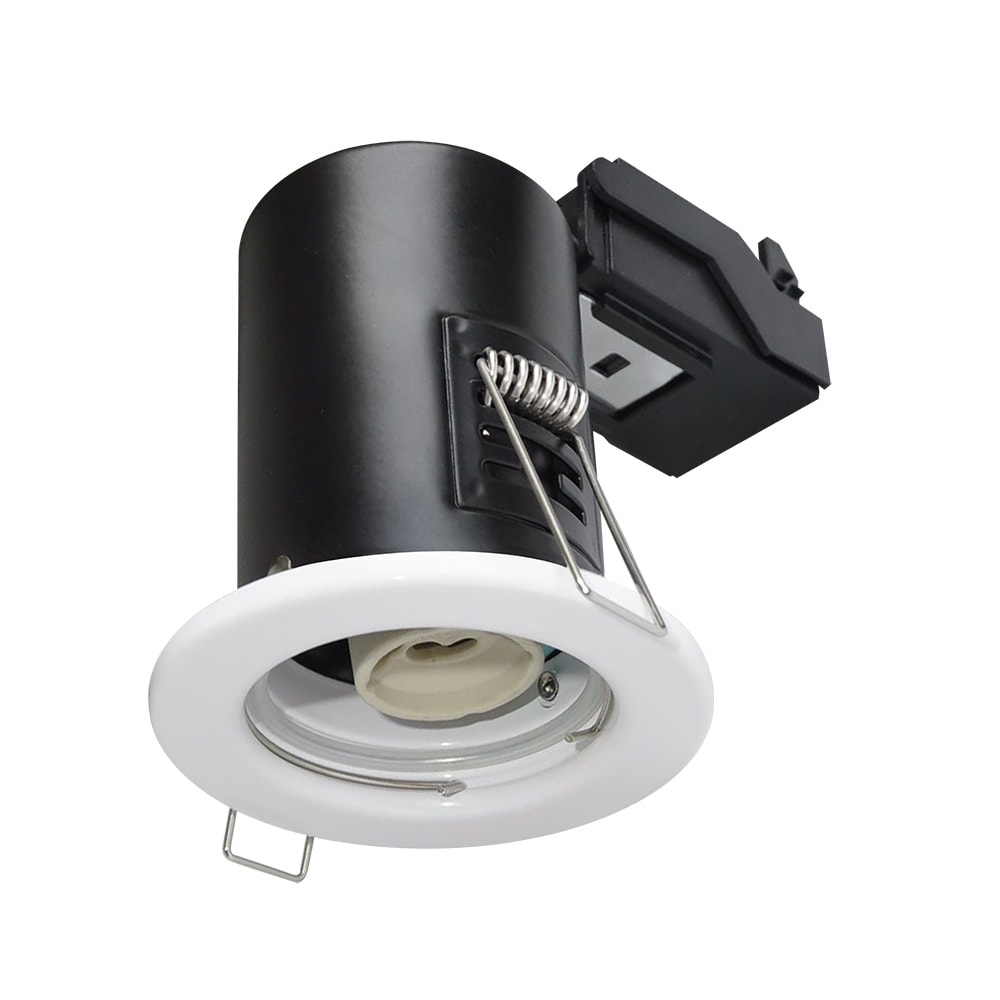
For recessed downlight replacement: If you’re replacing the entire fixture (not just the bulb), you’ll need to remove the old housing. Most recessed downlights use spring clips that hold them in place.
New LED downlights typically come with a driver (power supply) already installed. Position the new fitting in the ceiling aperture, align it properly, and push up until the spring clips engage.
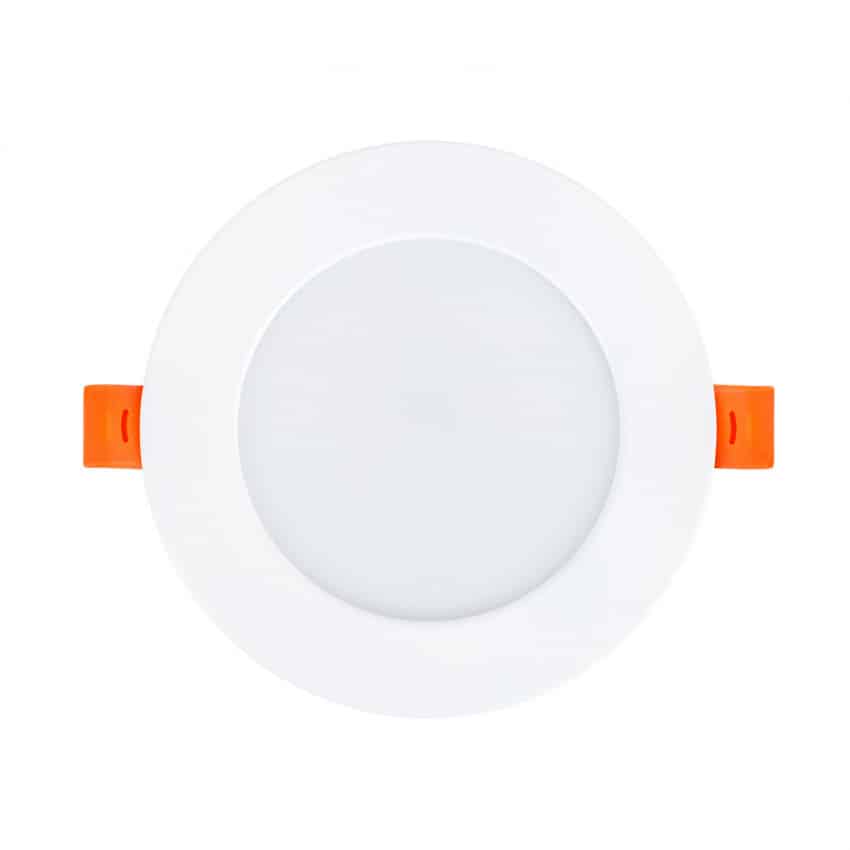
The Ledlam Downlight LED 5W Tilt 500DPD includes spring fitting clips and an integrated driver, making installation straightforward for most users. The 71mm cutout size fits standard recessed downlight apertures.
When to call a qualified electrician: If your downlights are hardwired directly to the circuit (not bulb-replaceable), or if you’re uncertain about electrical work, hire a suitably qualified electrician.
Dimmable LED Downlights and Compatibility
One common concern when switching from halogen to LED is dimmer compatibility. Halogen downlights work with virtually any traditional dimmer switch because they’re simple resistive loads. LED downlights are more complex, they require compatible dimmers to function properly.
Most older dimmer switches are designed for halogen or incandescent loads. When you connect a standard LED downlight to an old dimmer, you often get flickering, buzzing, or the light won’t dim smoothly.
The solution depends on your existing setup. If you have a modern dimmer installed within the last 5-10 years, it likely supports LED loads already. Check the dimmer’s documentation or look for “LED compatible” labelling on the switch plate.
If your dimmer is older, you have two options: replace the dimmer with an LED-compatible model, or choose dimmable LED downlights designed to work with standard dimmers. The Ledlam Downlight LED 5W Tilt 500DPD offers 3-STEP dimmable functionality without requiring a special dimmer switch.
This 3-step approach sidesteps compatibility issues entirely. You don’t need to replace your existing switches or install new dimmers, the dimming happens through the built-in LED driver. It’s a practical solution for older properties where rewiring dimmer circuits isn’t practical.
Watch Out
Connecting non-dimmable LED downlights to a dimmer switch designed for halogen can damage the LED driver and void the warranty. If you’re unsure about your dimmer compatibility, test with a single LED bulb first or consult a qualified electrician before installing multiple fixtures.
Choosing the Right LED Downlight for Your Home
Selecting the right LED downlight involves understanding several key specifications beyond just wattage and brightness.
Brightness (lumens): This measures actual light output. A 5W LED downlight typically produces 400-500 lumens, roughly equivalent to a 50W halogen. For larger spaces or task lighting, the 18W COB model produces 1400+ lumens.

Colour temperature: This affects the mood and feel of your space. Warm white (3000K) creates a cosy atmosphere suitable for living rooms and bedrooms. Cool white (4000K) works well in kitchens and bathrooms where task lighting matters.
Fitting type: Most recessed downlights use either GU10 or MR16 connections. Check your existing fixtures to determine which applies.
Tilt and adjustability: If you need to direct light at specific angles, choose a model with tilt functionality. The Ledlam Downlight LED 5W Tilt 500DPD allows adjustment of plus or minus 30 degrees, letting you aim light precisely where needed.
IP rating: This indicates moisture resistance. Standard indoor downlights are typically IP20 (no special protection). For bathrooms or damp areas, choose IP44 or higher to prevent moisture ingress into the electrical components.
Cutout size: This must match your existing ceiling aperture. Standard sizes are 68mm, 71mm, and 75mm. Measure your existing fixture or aperture before ordering to ensure compatibility.
Best For
The Ledlam Downlight LED 5W Tilt 500DPD is best for homeowners replacing 50W halogen downlights in living spaces where dimming capability and adjustable aim are important. The 18W COB model suits larger areas or commercial spaces requiring higher brightness.
Conclusion
The comparison between halogen vs LED downlights is fundamentally about efficiency and long-term value. LED technology reduces energy consumption by 85-90%, translates directly into measurable electricity bill savings, and requires far less frequent replacement. For a typical 6-downlight installation, you’re looking at approximately £118 annual energy savings, and that’s before accounting for reduced maintenance costs.
The practical obstacles, dimmer compatibility and installation complexity, have straightforward solutions. Modern dimmable LED downlights like the Ledlam range work with existing switches, and installation is often a simple bulb swap or straightforward fixture replacement.
If you’re ready to upgrade your halogen downlights to energy-efficient LED alternatives, Ledlam stocks a comprehensive range of recessed downlights with integrated drivers, tilt mechanisms, and dimmable options. Our LED downlights use 85-90% less energy than halogen equivalents, last 30 times longer, and come with spring fitting clips for straightforward installation. Browse our LED downlights collection or contact our team for advice on which model suits your space. Check out our LED Offers today and start reducing your electricity costs immediately.
Frequently Asked Questions
How much less electricity do LED downlights use than halogen?
LED downlights typically use 85-90% less energy than equivalent halogen downlights. For example, a 5W LED downlight produces similar brightness to a 50W halogen, and an 18W LED matches a 120W halogen. This dramatic difference is why switching to LED downlights is one of the most effective ways to reduce household electricity consumption and lower your energy bills.
How do I calculate the energy savings from replacing halogen downlights with LEDs?
Multiply the wattage difference by your daily usage hours, then by 365 days, and divide by 1000 to get annual kWh saved. For instance, replacing ten 50W halogens with 5W LEDs used 5 hours daily saves 91.25 kWh yearly. Multiply this by your local electricity rate to find your annual savings. Households can see significant annual savings, depending on usage and tariff.
Do LED downlights give the same brightness as halogen?
Yes, modern LED downlights deliver equivalent brightness to their halogen counterparts. Brightness is measured in lumens, and quality LED downlights are designed to match the light output of the halogen bulbs they replace. The Downlight LED 18W COB 1400DP, for example, matches a 120W halogen’s brightness whilst using a tenth of the power, with no compromise on light quality.
Do LED downlights work with existing dimmer switches?
Not all LED downlights work with standard halogen dimmer switches. Many older dimmers are incompatible with LED technology and cause flickering. However, dimmable LED downlights designed for compatibility do exist. Ledlam’s Downlight LED 5W Tilt 500DPD offers 3-STEP dimming using your existing switch without needing a new dimmer, solving this common compatibility issue.
How long do LED downlights last compared with halogen bulbs?
LED downlights last approximately 30 times longer than halogen downlights. A typical halogen downlight lasts 2,000-4,000 hours, while LED downlights often last 25,000-50,000 hours or more. This means fewer replacements, lower maintenance costs, and reduced disruption. Combined with energy savings, the total cost of ownership over a decade strongly favours LED.