












LED Wattage Equivalent Chart for Home Lighting
Table of Contents
- Why LED Wattage Equivalent Matters for Home Lighting
- LED Wattage Equivalent Chart: Quick Reference
- LED Lumens to Watts Conversion: Understanding the Difference
- Lumens for Room Size: Getting Brightness Right
- LED Colour Temperature Guide for Different Spaces
- LED Dimmer Compatibility: Making Your Lights Work
- Energy Savings and Lifespan Benefits
- Conclusion
- Frequently Asked Questions
Last Updated: October 17, 2026
Why LED Wattage Equivalent Matters for Home Lighting
When replacing an old incandescent or halogen bulb, you can’t just match the wattage. An LED that uses 5W produces as much light as a 40W incandescent, which is why understanding LED wattage equivalent is crucial before you buy. Wattage tells you power consumption; lumens tell you brightness.
LEDs are far more efficient than older technology. A traditional 60W incandescent wastes most of its energy as heat, while an LED delivering the same brightness uses roughly 10% of that power. That’s why products are described as “60W equivalent” even though they consume only 6-8W.
Getting this right saves money on electricity, reduces how often you replace bulbs, and ensures your home is lit properly without wasteful overconsumption. Below, we’ll show you how to decode LED wattage equivalents, find the right brightness for each room, and avoid common mistakes.
LED Wattage Equivalent Chart: Quick Reference
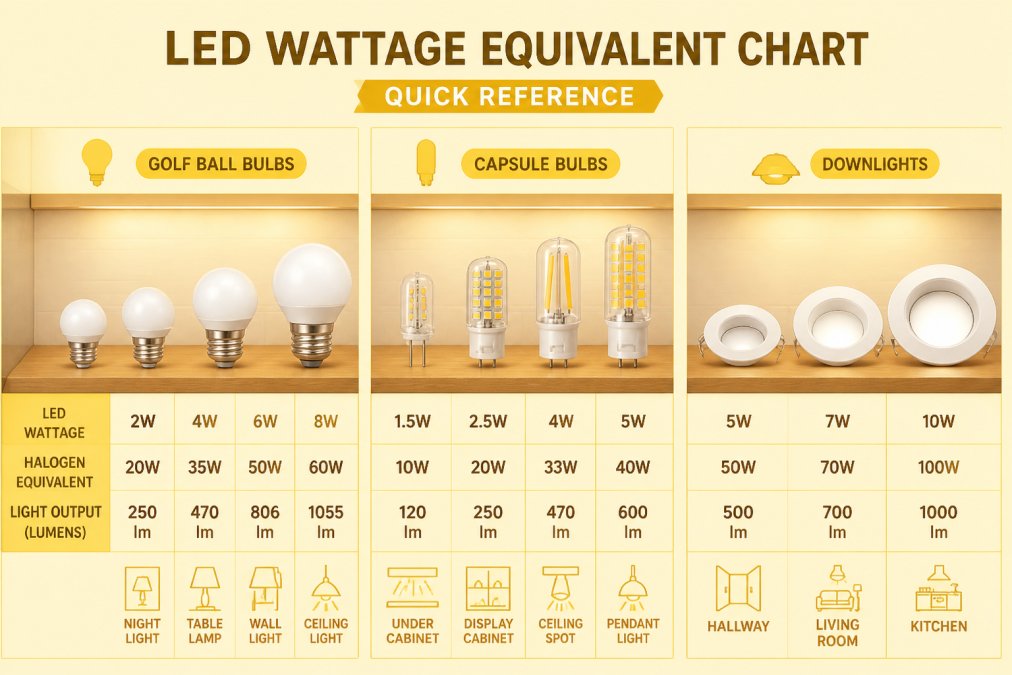
The table below shows how LED wattage compares to the older incandescent and halogen bulbs you’re replacing. These equivalencies assume standard brightness output measured in lumens.
| Old Bulb Type | Old Wattage | LED Equivalent | LED Wattage |
|---|---|---|---|
| Incandescent | 40W | Golf ball or standard | 5W |
| Incandescent | 60W | Standard A-shape | 8-10W |
| Incandescent | 100W | Standard A-shape | 12-15W |
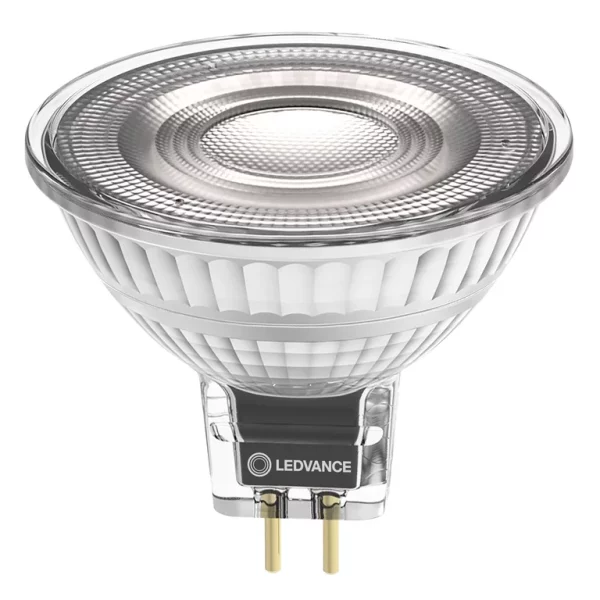
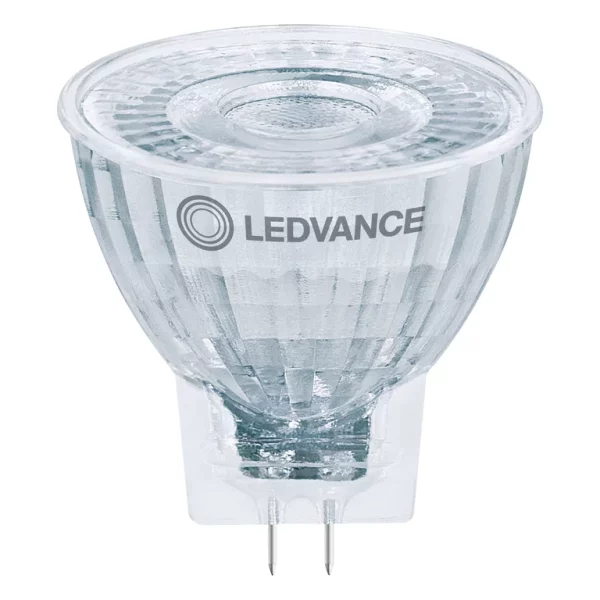
| Halogen downlight | 50W | Downlight | 5-6W |
| Halogen downlight | 75W | Downlight | 8-10W |
| Halogen downlight | 120W | Downlight | 18W |
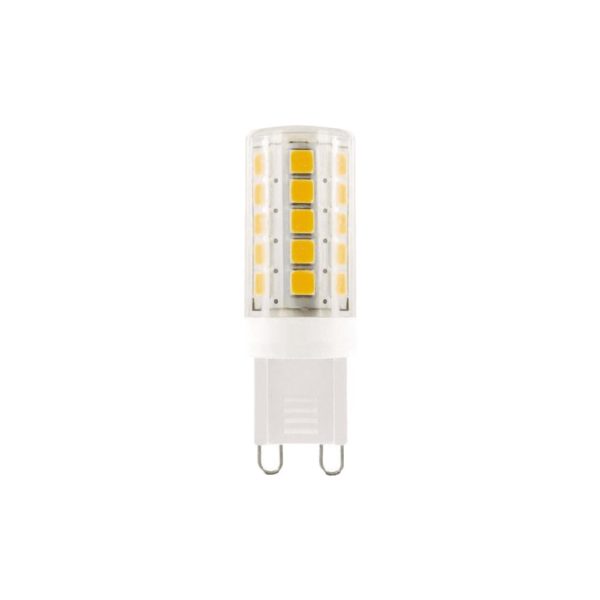
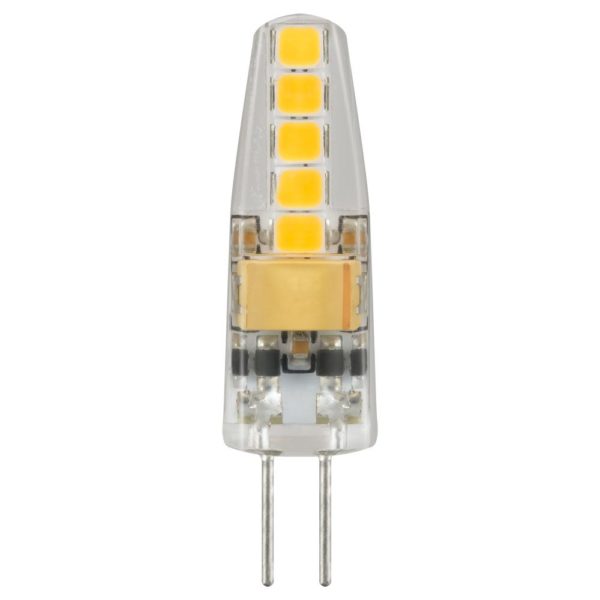
| Halogen capsule | 33W | G9 capsule | 4W |
| Halogen capsule | 50W | G9 capsule | 6W |
Common Bulb Types and Their LED Replacements
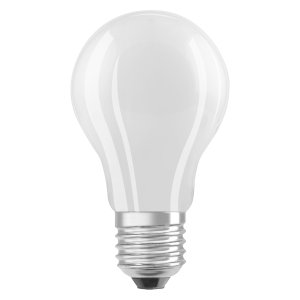
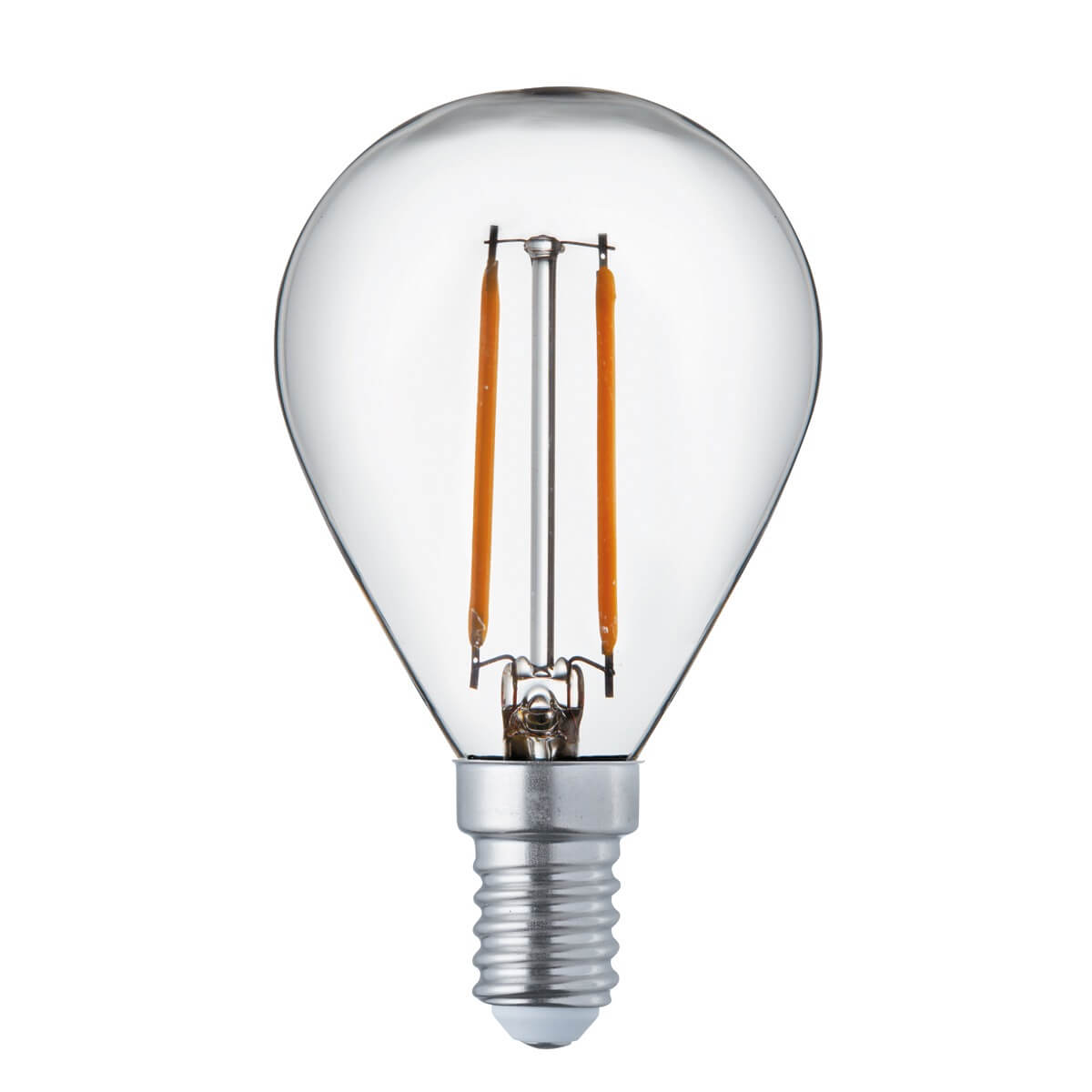
Not all bulbs fit the same socket. The most common domestic fittings are B22 (bayonet), E27 (Edison screw), E14 (small screw), GU10 (push-and-twist spotlight), and G9 (capsule). Each requires its own LED replacement, and the LED wattage equivalent varies with the bulb’s design and LED chip quality.
The B22 LED Golf Ball Bulb 5W from Ledlam, for example, replaces a 40W incandescent golf ball bulb. It uses the same bayonet fitting and consumes 88% less energy. Similarly, if you have G9 capsule fittings in wall lights or under-cabinet strips, the Capsule G9 4W LED Bulb Dimmable from our range replaces a 33W halogen capsule.

The key is matching both socket type and brightness level. Ledlam’s range includes LED replacements for all common domestic fittings, with clear equivalency information.
Downlights and Spotlights Conversion
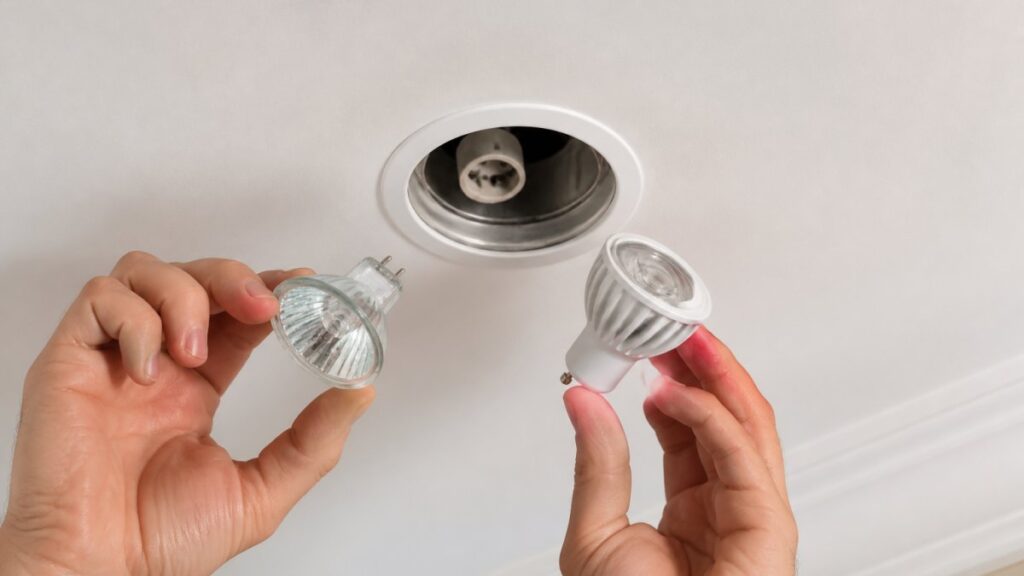
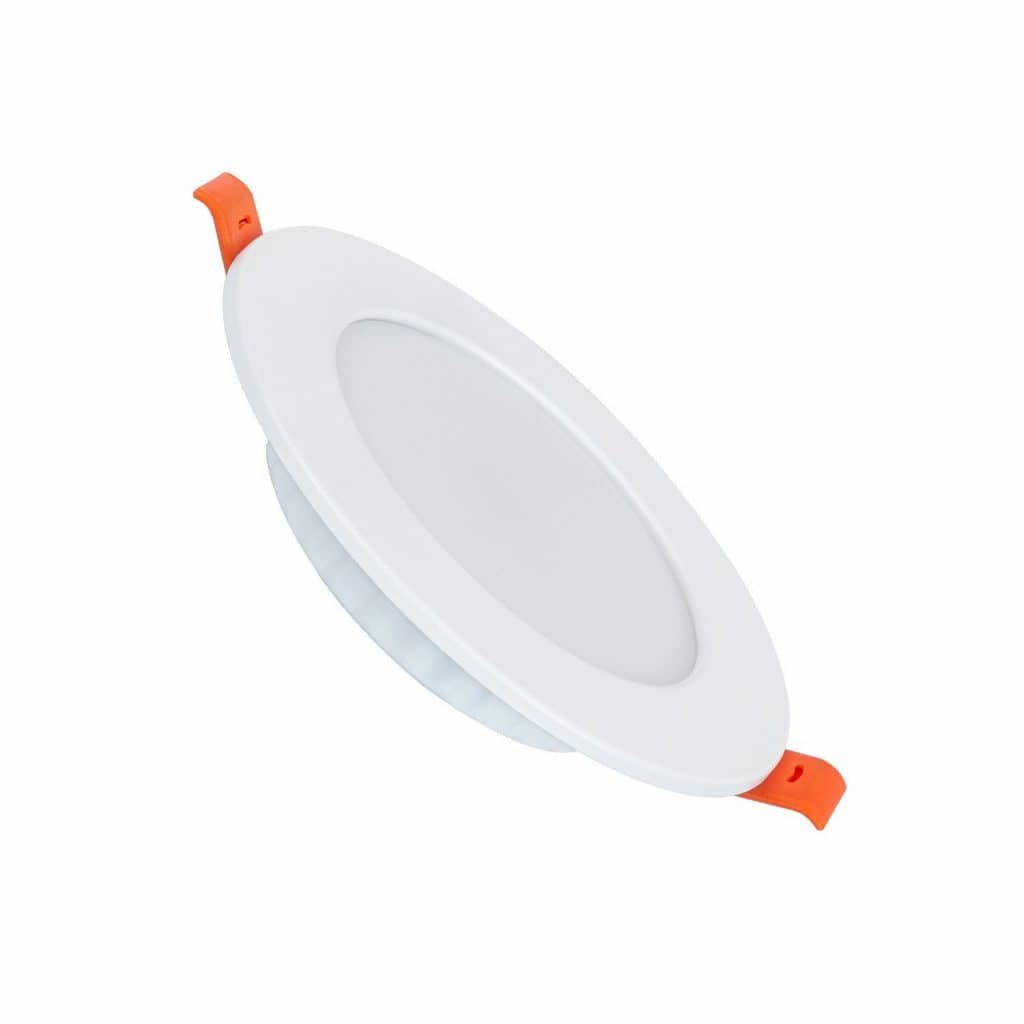
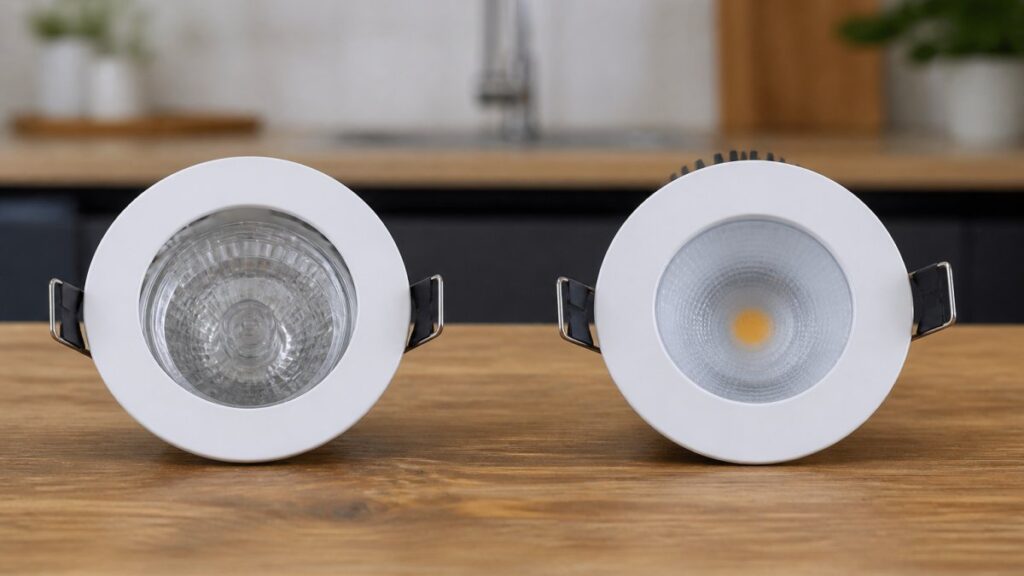
Downlights and spotlights account for a large portion of home lighting energy use, especially if you have halogen fittings. A typical halogen downlight uses 50W and needs replacing every 1,000 hours of use. An LED downlight using 5-6W lasts 30 times longer and produces the same light output with far less heat.
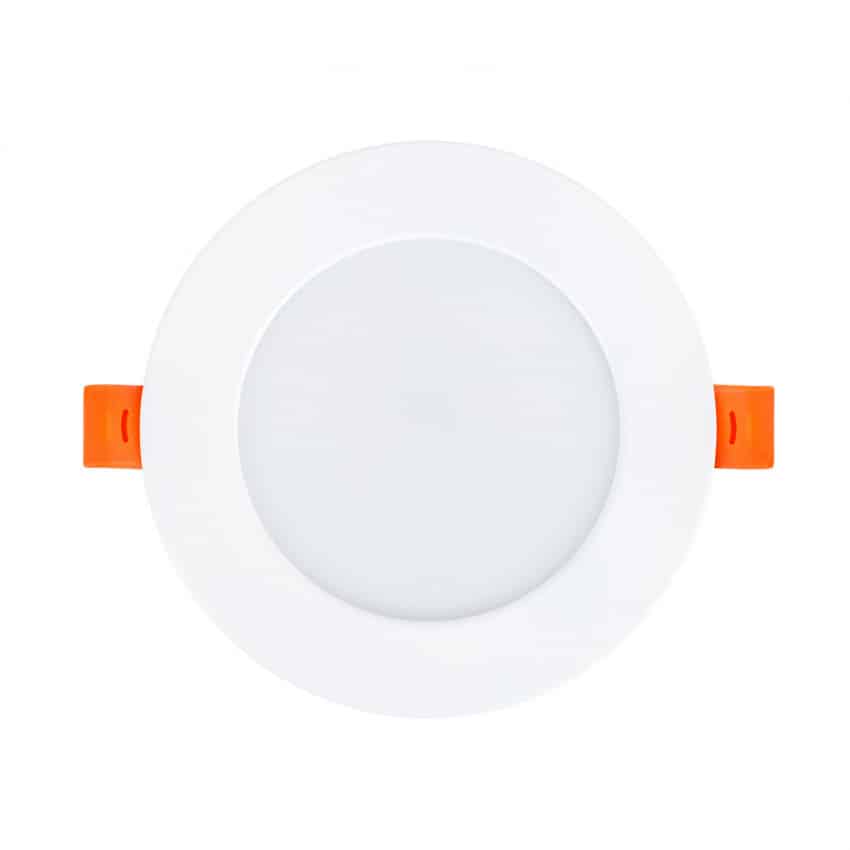
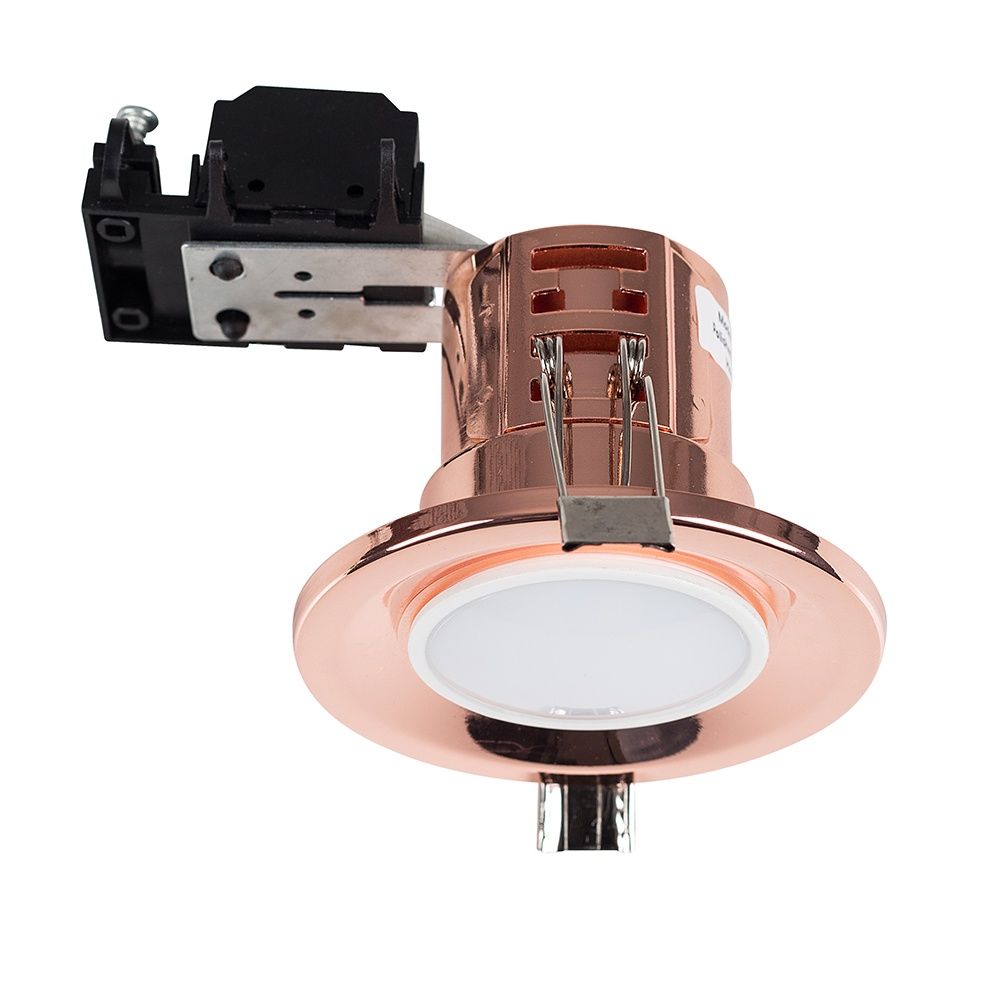
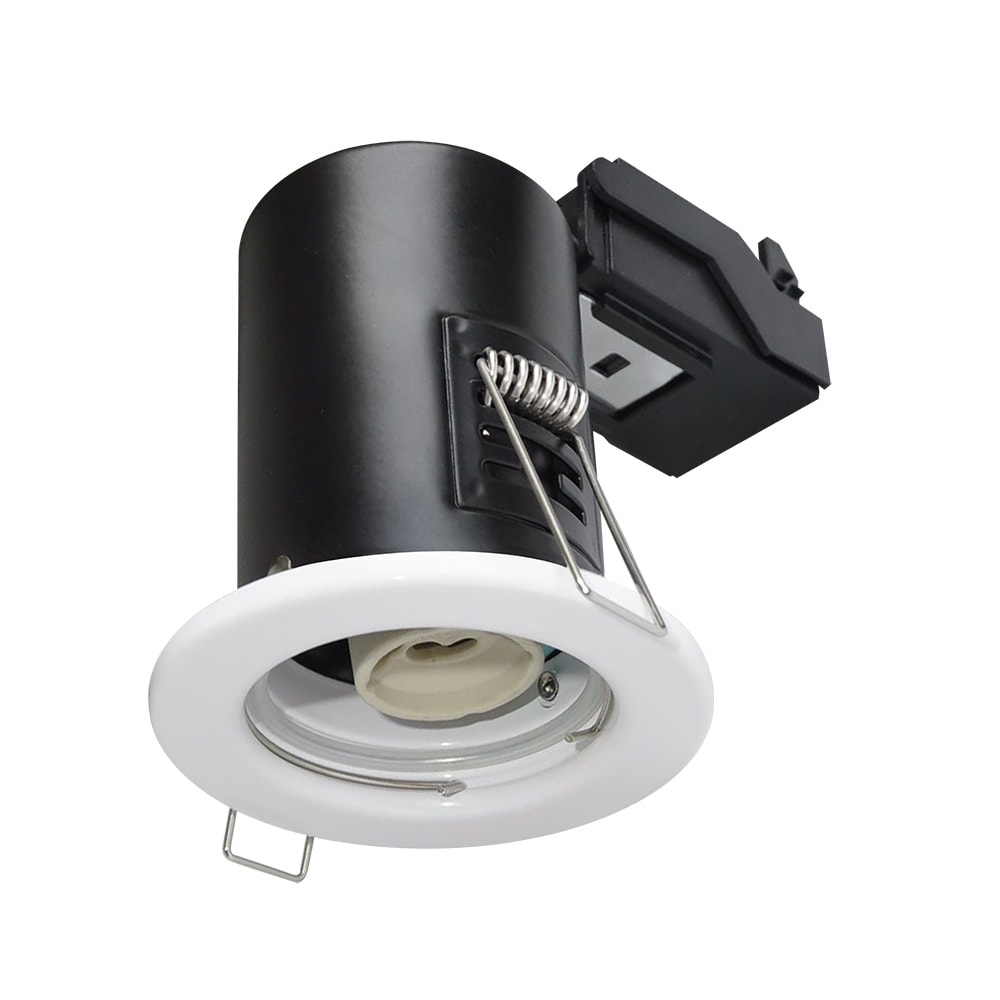
The Ledlam Downlight LED 5W Tilt 500DPD 3-STEP Dimmable is a direct replacement for a 50W halogen downlight. It fits the same 71mm cutout, tilts up to 30 degrees to direct light where you need it, and includes a 3-step dimming feature built into the fitting.
The tilt mechanism matters. A downlight pointing at a reflective surface wastes light, whilst one angled correctly lights the room efficiently.
LED Lumens to Watts Conversion: Understanding the Difference
The wattage of an LED tells you how much electricity it consumes. The lumens tell you how bright it is. This is the single most important distinction in LED lighting, and it’s where many people go wrong.
A lumen is a unit of visible light output. A 5W LED producing 510 lumens is brighter than a 5W LED producing 400 lumens, even though both consume the same power.
When shopping for LED replacements, always check the lumen output, not just the wattage. The packaging or product listing should state both. At Ledlam, our LED bulbs include lumen ratings alongside the wattage equivalent.
A cheap LED with poor optics might use 5W but only produce 350 lumens, noticeably dimmer than the equivalent incandescent, tempting you to buy a higher-wattage LED and defeat the energy-saving purpose.
Lumens for Room Size: Getting Brightness Right
The brightness you need depends on the room’s purpose, size, and how you use it. A bedroom needs less light than a kitchen, and a living room used for reading needs more than one used mainly for watching television. The industry standard is lumens per square metre, though most homeowners find it easier to think in total brightness for their space.
Bedroom and Living Room Lighting Levels
Bedrooms typically need 10-20 lumens per square metre for general lighting, with task lighting (reading lamps, bedside lights) providing focused brightness where needed. A 3×4 metre bedroom (12 square metres) needs roughly 120-240 lumens for general ambient light. A single ceiling light fitting with two or three LED bulbs producing 400-500 lumens each covers this comfortably.
Living rooms are more flexible. For relaxing and watching television, 10-15 lumens per square metre is adequate; if you read regularly or use it as a workspace, aim for 15-20.
Colour temperature also affects how bright a room feels. Warm white light (2700K) feels cosier but slightly dimmer than cool white (4000K) at the same lumen output.
Kitchen and Bathroom Requirements
Kitchens are task-focused spaces where you need good visibility for food preparation and cooking. Aim for 30-40 lumens per square metre of general lighting, with additional task lighting over work surfaces. A 3×4 metre kitchen needs 360-480 lumens from ceiling lights, plus another 300-400 lumens from under-cabinet or over-counter task lighting.
Bathrooms need 20-30 lumens per square metre for general lighting, with good colour rendering so you can see your face accurately. Aim for 400-600 lumens around the mirror for grooming tasks, and avoid a single bright downlight directly overhead, which creates harsh shadows.
According to guidance on lighting standards from the Chartered Institution of Building Services Engineers, task-specific lighting (kitchens, bathrooms, workspaces) should be brighter and more focused than ambient lighting. This approach uses less total energy because you’re concentrating light where it’s needed rather than over-lighting the entire room.
LED Colour Temperature Guide for Different Spaces
Colour temperature is measured in Kelvin (K) and describes whether light appears warm (yellowish) or cool (bluish). It affects how a space feels and can influence mood and alertness.
B22 LED Golf Ball Bulb 5W 510GP →
Warm white (2700K) is the colour of traditional incandescent bulbs. It creates a cosy, relaxing atmosphere and is ideal for bedrooms, living rooms, and dining areas. Cool white (4000K) is neutral and bright, suitable for kitchens, bathrooms, and workspaces where you need clear visibility.
When replacing halogen or incandescent bulbs with LEDs, match the colour temperature to maintain the same feel. A bedroom lit with 4000K LEDs will feel clinical even if brightness matches the old 2700K incandescent.
Colour rendering index (CRI) is another important factor. It measures how accurately colours appear under the light. Most LEDs have a CRI of 80 or higher, which is adequate for domestic use.
LED Dimmer Compatibility: Making Your Lights Work
Not all LED bulbs work with traditional dimmer switches. Many older dimmers were designed for the high power draw of incandescent bulbs and don’t function correctly with low-power LEDs, causing flickering, buzzing, or uneven dimming.
The solution is to use dimmable LEDs with compatible dimmers, or to switch to 3-step dimmable LEDs that don’t require a dimmer switch at all. The Ledlam Downlight LED 5W Tilt 500DPD 3-STEP Dimmable is a good example.

If you have existing dimmer switches and want to keep them, check whether they’re compatible with LEDs. If unsure, test a single dimmable LED bulb in the fitting before buying multiple replacements. Ledlam stocks a range of dimmable LED options.
For new installations or switch upgrades, consider replacing old dimmers with LED-compatible models to eliminate the guesswork.
Energy Savings and Lifespan Benefits
The primary reason most people switch to LEDs is energy savings. An LED consuming 5W instead of 50W uses 90% less electricity. Over a year, that’s a significant reduction in your electricity bill, especially if you have multiple downlights or use certain rooms heavily.
The financial benefit compounds because LEDs last far longer. A typical halogen downlight lasts 1,000 hours; an LED downlight lasts 25,000-50,000 hours.
LEDs also produce less heat.
The Energy Saving Trust guidance on LED lighting confirms that switching from incandescent or halogen to LEDs reduces lighting energy consumption by 80-90% for most households.
Environmental benefits are significant too. LEDs contain no mercury, unlike compact fluorescent bulbs, and their long lifespan means fewer bulbs end up in landfill. If you’re concerned about your carbon footprint, LEDs are one of the highest-impact changes you can make at home.
Conclusion
Understanding LED wattage equivalent is the foundation of choosing the right replacement bulbs. Match the lumen output to your old bulb’s brightness, choose the right colour temperature for each room, and verify compatibility with any dimmers or special fittings.
Ledlam stocks a comprehensive range of LED bulbs, downlights, and spotlights for every common domestic fitting. Our products include clear equivalency information and lumen ratings. Whether you’re replacing a single bedside lamp or retrofitting an entire kitchen, our team can help you find the right solution.
Browse our LED Bulbs and Downlights categories online, or visit our Basildon Market shop to see the products in person and get advice from our team. We offer competitive prices and practical guidance to help you save energy without sacrificing light quality or comfort in your home.
Frequently Asked Questions
What LED wattage is equivalent to a 60W incandescent bulb?
A 60W incandescent bulb produces roughly 800 lumens. You’ll need an LED bulb of approximately 8-10W to achieve the same brightness. Most LED wattage equivalent charts show 60W incandescent as equivalent to 8-10W LED. The exact wattage depends on the LED’s lumen output, so always check the lumens rating on the packaging rather than relying on wattage alone.
How do I convert traditional bulb wattage to LED?
The conversion isn’t a simple ratio because LEDs are far more efficient. Instead of looking at watts, compare lumens: a 40W incandescent produces about 450 lumens, so choose an LED with similar lumens output (typically 4-5W). For halogen downlights, a 50W halogen equals roughly 5W LED, and a 120W halogen equals around 18W LED. Use a wattage equivalent chart as your starting point, then verify the lumens match your needs.
How many lumens do I need for different rooms?
Lumens requirements depend on room size and purpose. Bedrooms typically need 10-20 lumens per square metre for relaxed lighting. Living rooms need 15-30 lumens per square metre. Kitchens and bathrooms require 30-50 lumens per square metre for task lighting. A small bedroom (3m × 4m) needs around 1,200-2,400 lumens total, while a kitchen of similar size needs 3,600-6,000 lumens. Measure your room and multiply the area by the lumens-per-square-metre figure for your space type.
What colour temperature should I choose for home lighting?
Colour temperature is measured in Kelvin (K). Warm white (2,700K) suits bedrooms, lounges, and relaxation spaces, creating a cosy atmosphere. Cool white (4,000K) works well in kitchens, bathrooms, and home offices where task lighting is important. Daylight (5,000K and above) is best for detailed work or areas needing bright, energetic lighting. Most homes use warm white for living areas and cool white for functional spaces. Check the packaging for the Kelvin rating before purchasing.
Will LED bulbs work in my old dimmer switches?
Not all LED bulbs work with traditional dimmer switches. Older dimmers are designed for incandescent loads and may cause flickering or buzzing with standard LEDs. Look for dimmable LED bulbs specifically marked as compatible with your dimmer type. Some LEDs use 3-step dimming built into the bulb itself, requiring no special dimmer switch. If you have concerns about compatibility, choose dimmable LED products or consider upgrading to a modern dimmer switch designed for LED use.
Does higher wattage LED mean brighter light?
No. With LEDs, lumens determine brightness, not watts. A 5W LED can produce the same brightness as a 10W LED if it has a higher lumen output. Wattage only tells you energy consumption. Always compare lumens when choosing brightness: 450 lumens is roughly equivalent to a 40W incandescent, regardless of whether the LED is 4W or 5W. Check both the wattage and lumens on the packaging to make an informed choice.
Can I use any LED bulb in any light fitting?
No. LED bulbs must match your fitting type: B22 bayonet, E27 screw, E14 small screw, GU10 push-fit, or G9 capsule are common domestic types. Check your existing bulb or fitting before purchasing. Some fittings, such as enclosed or recessed downlights, have specific LED requirements. Additionally, certain LED bulbs may not fit in tight spaces or under low-profile shades. Always verify the fitting type and physical dimensions before buying.